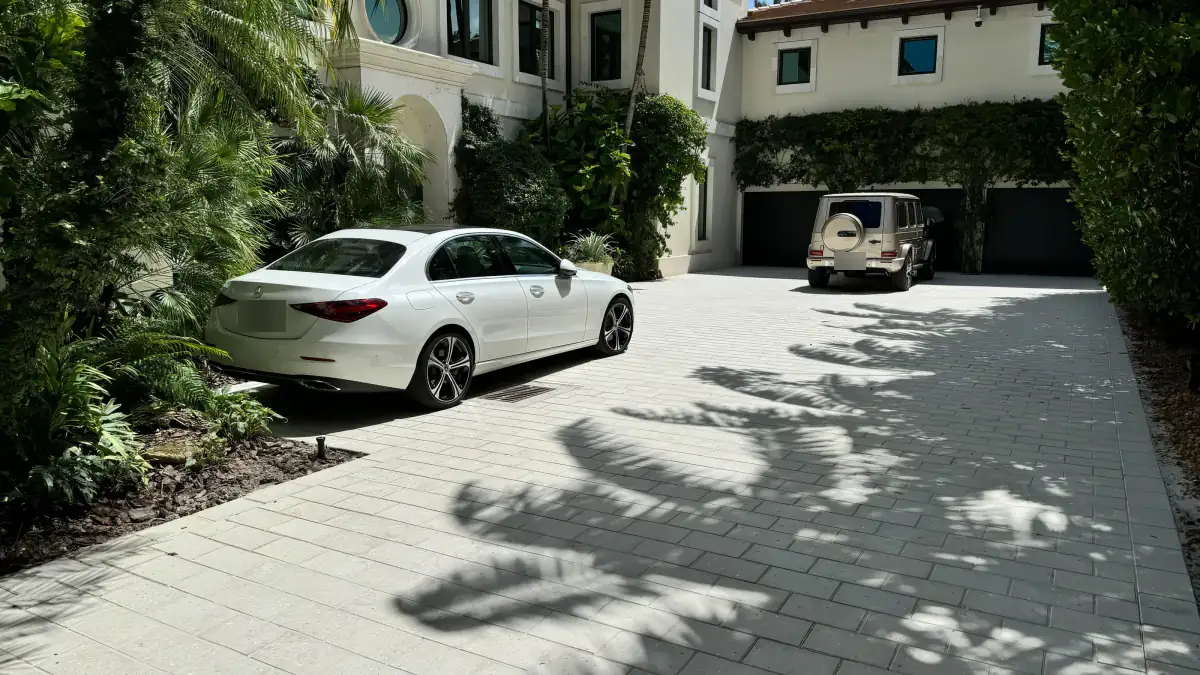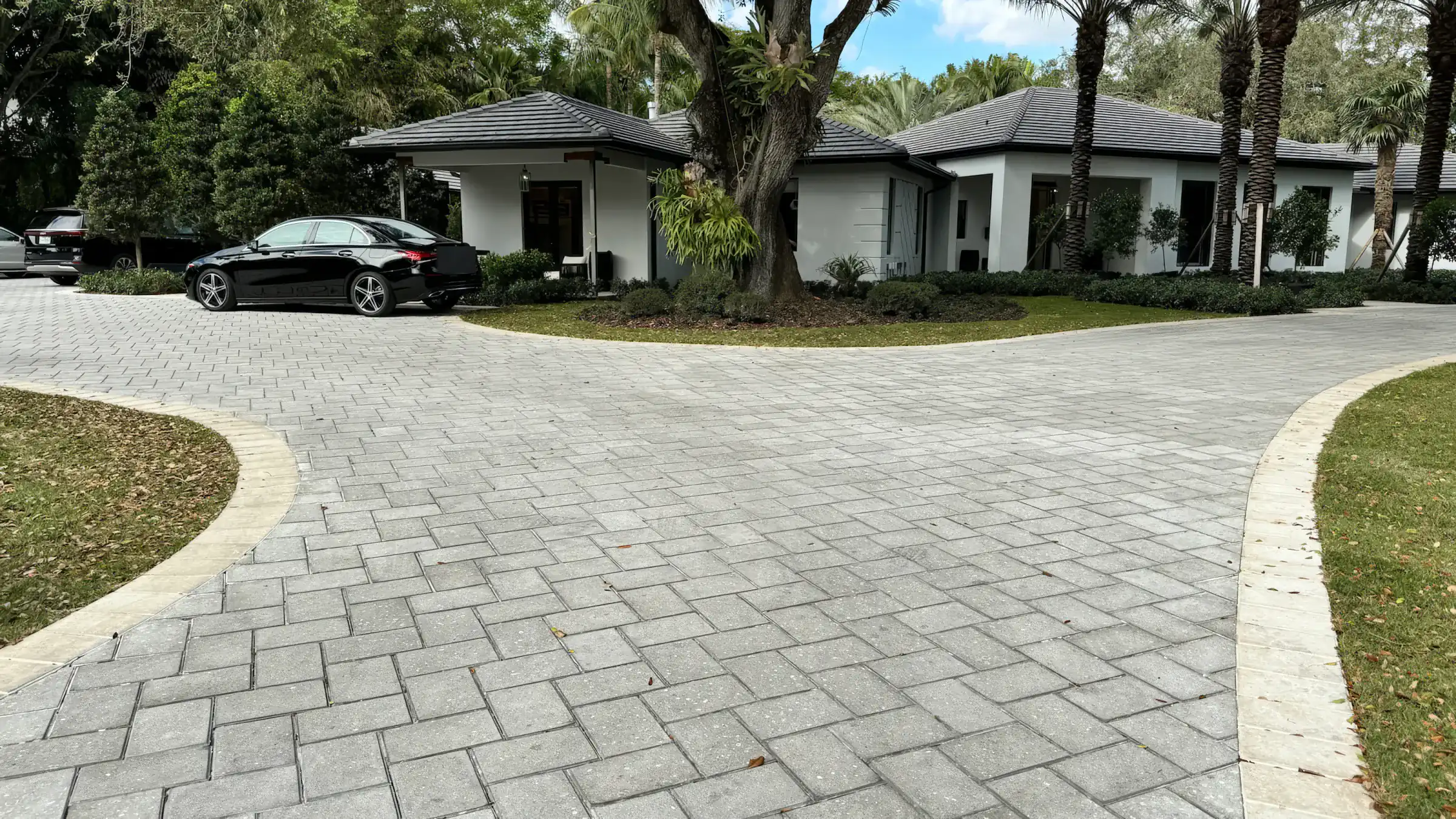
Curved gray paver driveway
Photo: a MiamiCrete driveway.
Licensed General Contractor · CGC1529269
Paver, concrete, stamped concrete and travertine driveways for homes in Westchester and Coral Terrace.
4.6 on Google
The short answer
In Westchester and Coral Terrace, driveway permits come from Miami-Dade County, not from a city, because both neighborhoods are unincorporated. The county's driveway guide asks for a survey, photos of the current driveway and the measurements of the new one, and pavers or stamped concrete also need a construction covenant recorded with the Clerk of the Court. MiamiCrete's office at 777 NW 72nd Ave is roughly 2.5 to 4 miles north of both neighborhoods.
Westchester and Coral Terrace
Westchester and Coral Terrace are census-designated places in unincorporated Miami-Dade County, so there is no city building department: driveway work is permitted by the county. Miami-Dade's driveway guidelines send applicants to the Public Works permits portal and list the documents it wants: a survey, a picture of the site's current condition, and the detail and measurements of the driveway being installed or modified.
Driveways other than asphalt or plain concrete, for example brick pavers, stamped concrete or concrete slabs with grass between them, need a Construction Covenant recorded by the Clerk of the Court and Comptroller. If the home is in an area controlled by a homeowners association, the county also asks for the association's approval document, and it asks for a water and sewer bill to confirm there is no active septic tank (an active septic tank means the driveway sketch needs a Health Department stamp).
The county inspects twice: a base inspection and a Public Works final inspection. Per the same guide, the downtown office processes permits for updating existing residential driveways, while the West Dade office handles new driveways for existing homes.
Paving that is exempt from a building permit is still reviewed by the county under a Zoning Improvement Permit (ZIP), which asks for a current land survey and scaled drawings of the improvement.
Since March 31, 2025, Miami-Dade County requires approval for new or expanded paving (what the code calls non-structural impervious surface improvements) on single-family and duplex properties, in both unincorporated areas and cities; a city may run its own program if it is at least as strict as the county's. Ask the permit office whether your project triggers this drainage review.
Removing or relocating a tree in unincorporated Miami-Dade needs prior authorization from the county (a tree removal or relocation permit), so a tree in the way of a wider driveway is its own permit.
Where we work
We build driveways across Westchester and Coral Terrace (ZIP 33155, 33165, 33174, 33144, 33175), from around Tropical Park (a Miami-Dade County park since 1979, on the old racetrack site), A.D. "Doug" Barnes Park, Nicklaus Children's Hospital, Bird Road (SW 40th Street), Coral Way, Galloway Road (SW 87th Avenue), Palmetto Expressway (SR 826), SW 8th Street (Tamiami Trail), Ludlam Road (SW 67th Avenue) and Florida International University, built on the former Tamiami Airport site. Westchester and Coral Terrace is about 2.6 miles from our office at 777 NW 72nd Ave #2082. Call (305) 790-4850 or send the estimate form to set up a visit.
County driveway rules for these neighborhoods: the driveway's interior width must be 10 to 20 feet, driveways are allowed only in front of the house with no more than two driveways or approaches, and the interior edge must sit at least 5 feet from the property line. Flares are allowed on both sides, up to 10 feet long, and can end at the property line.
Most of the houses here are post-war. Miami-Dade's own history of Westchester says a 1955 subdivision named Westchester kicked off the post-war building boom, and that subdivisions such as Miracle Manor, Mirador, Westchester Park, Town Park and Coral Park followed through the 1960s. FIU's community report on Coral Terrace says many ex-soldiers bought newly built homes there in the years right after World War II.
Before planning drainage or grading, check the property's flood zone with Miami-Dade's flood zone map or the county's Flood Zone Hotline.
Recent work
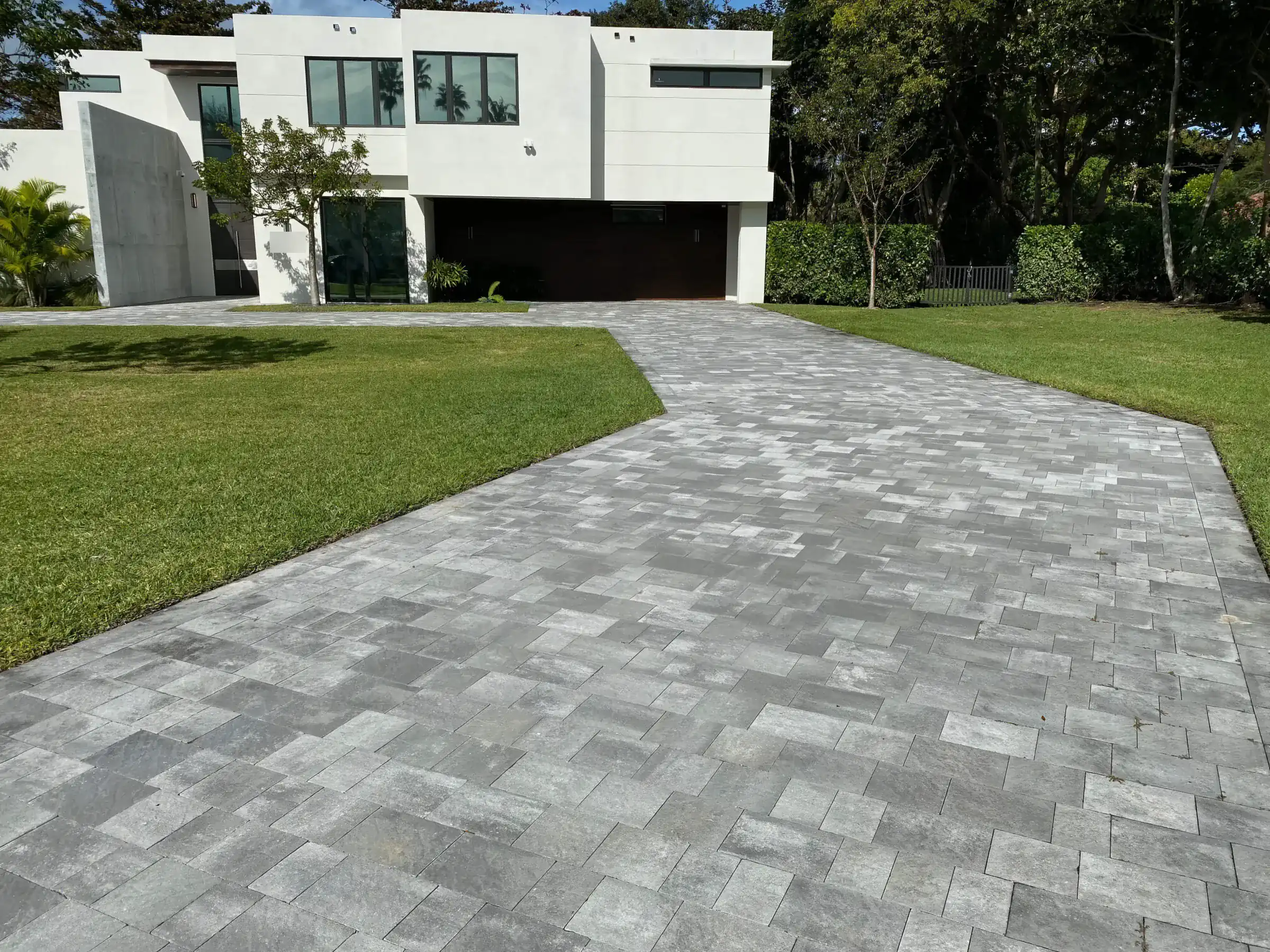
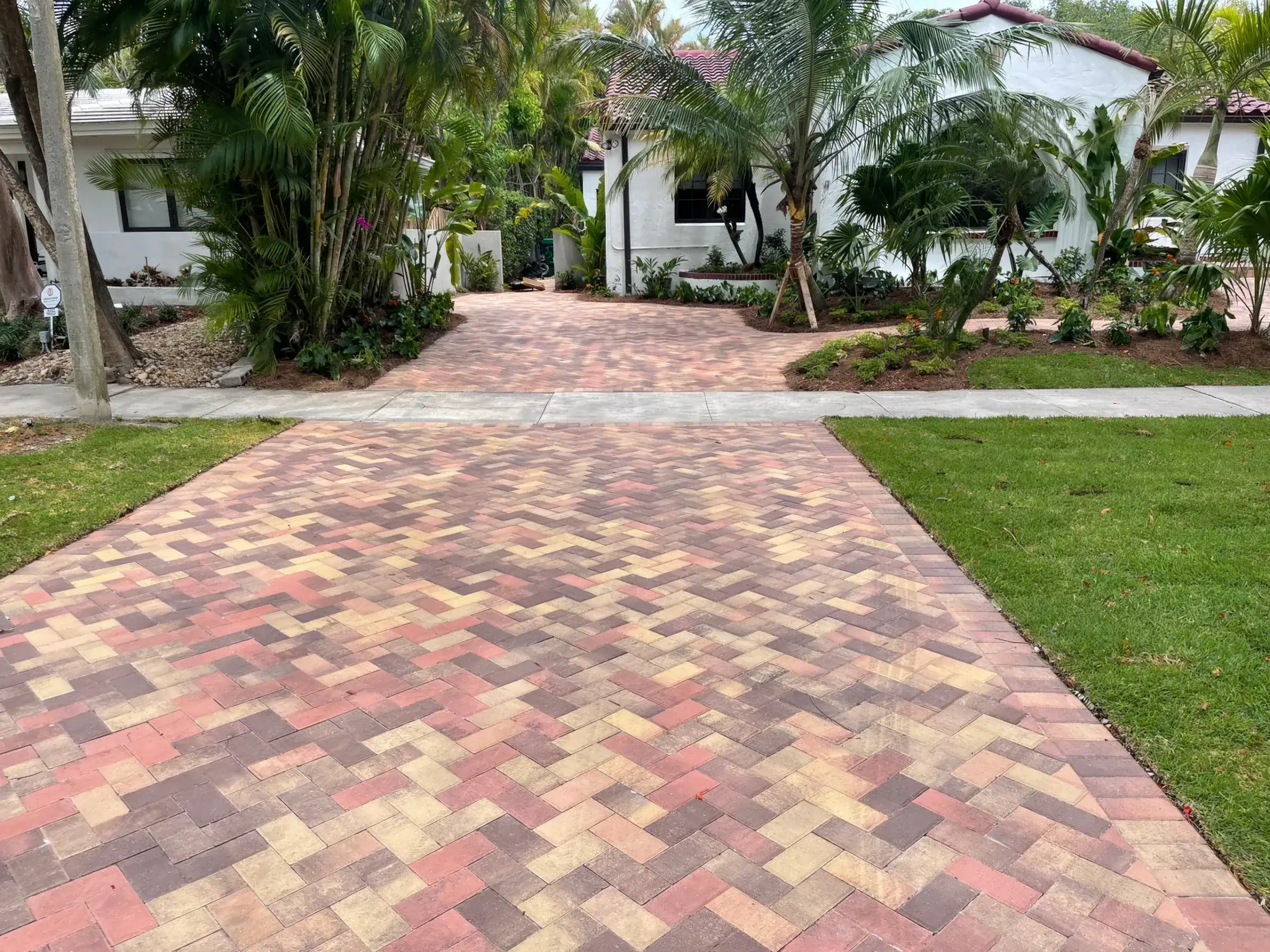
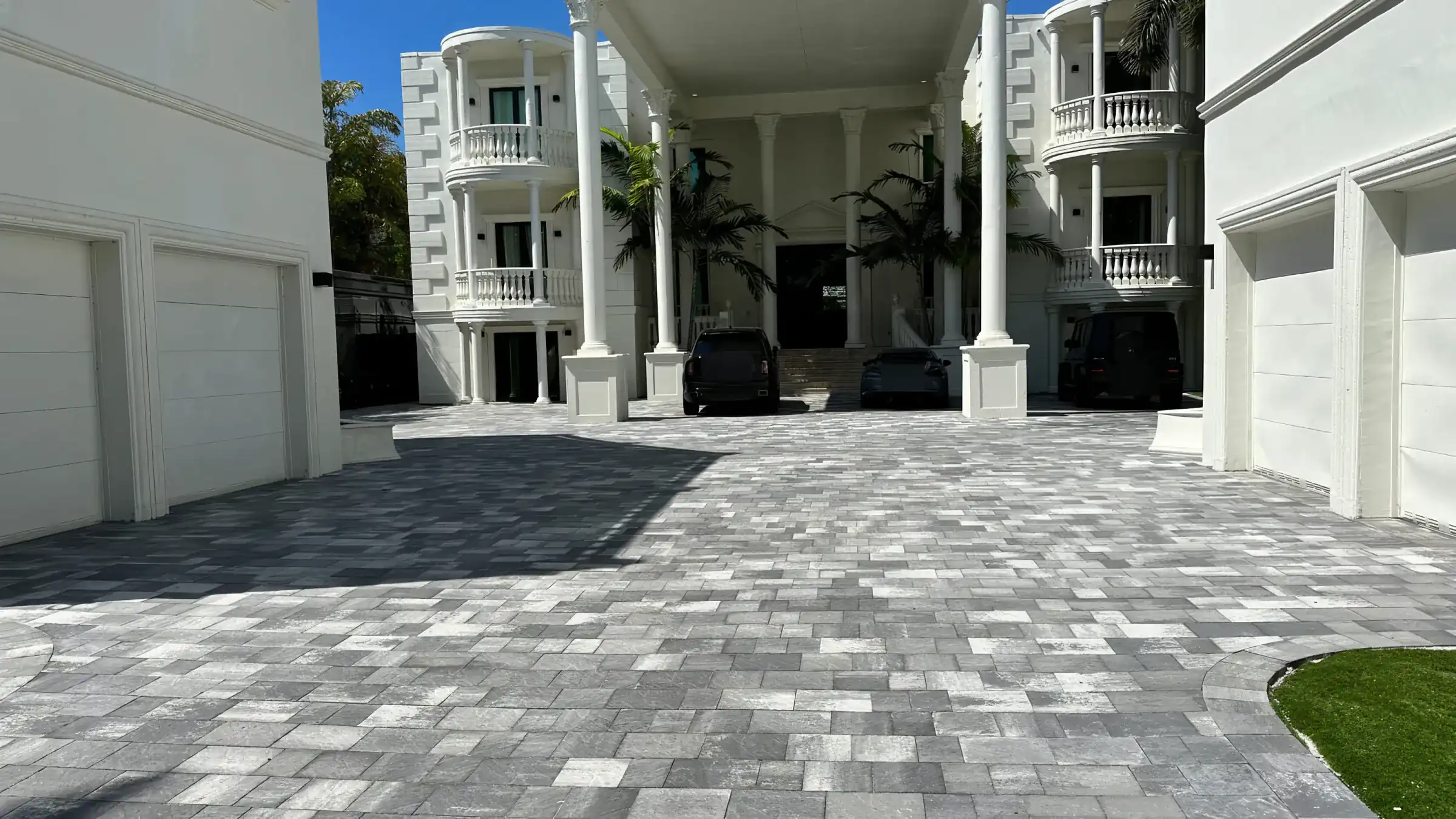
Interlocking pavers in gray, charcoal, tan or red blends. Easy to repair one piece at a time.
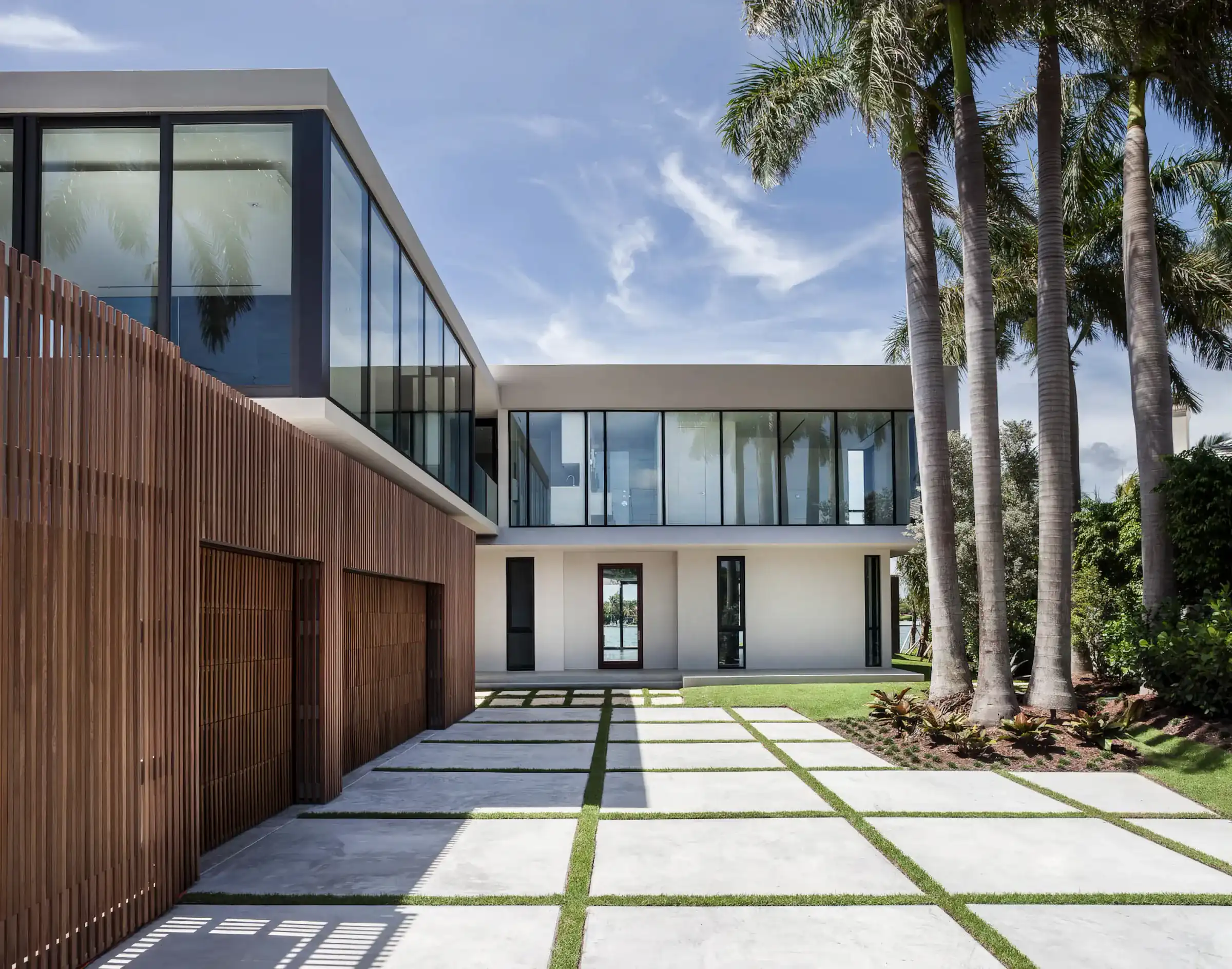
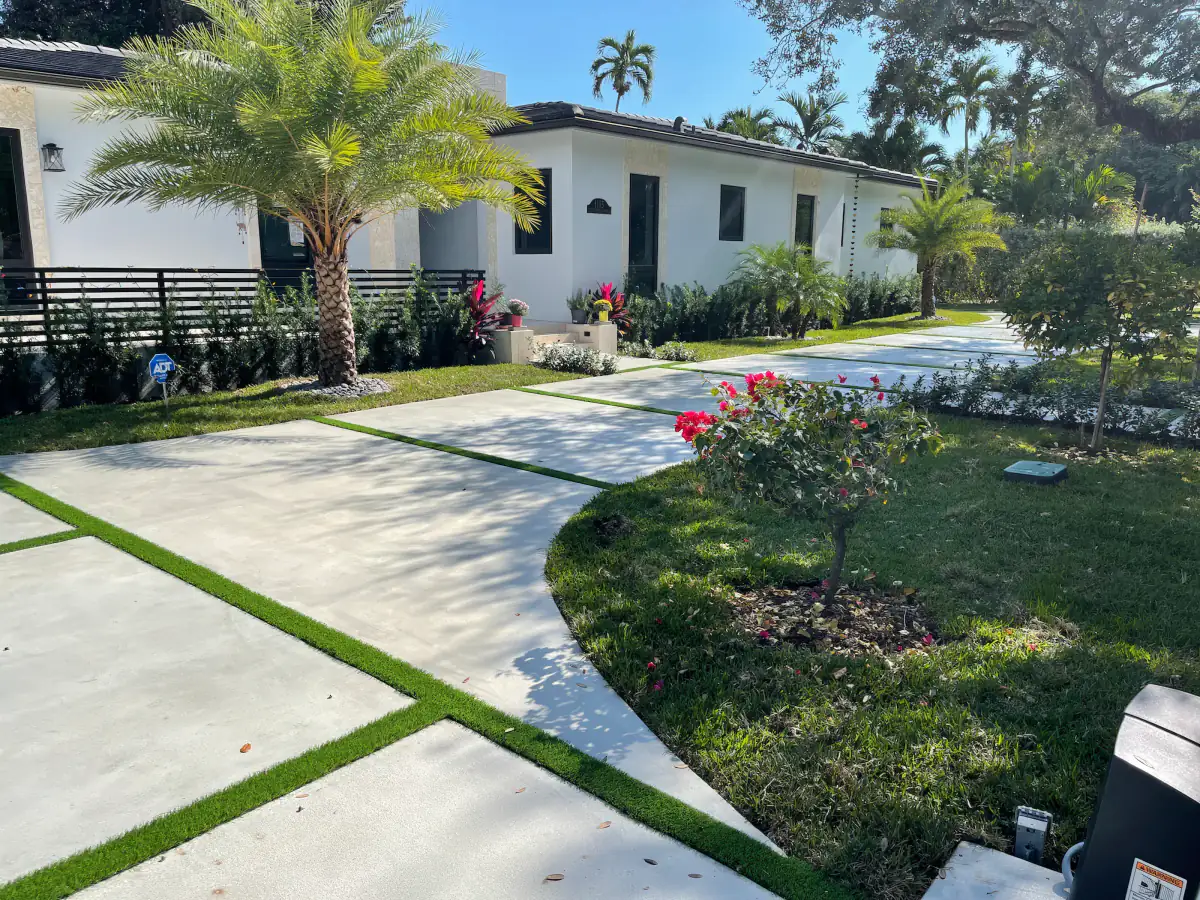
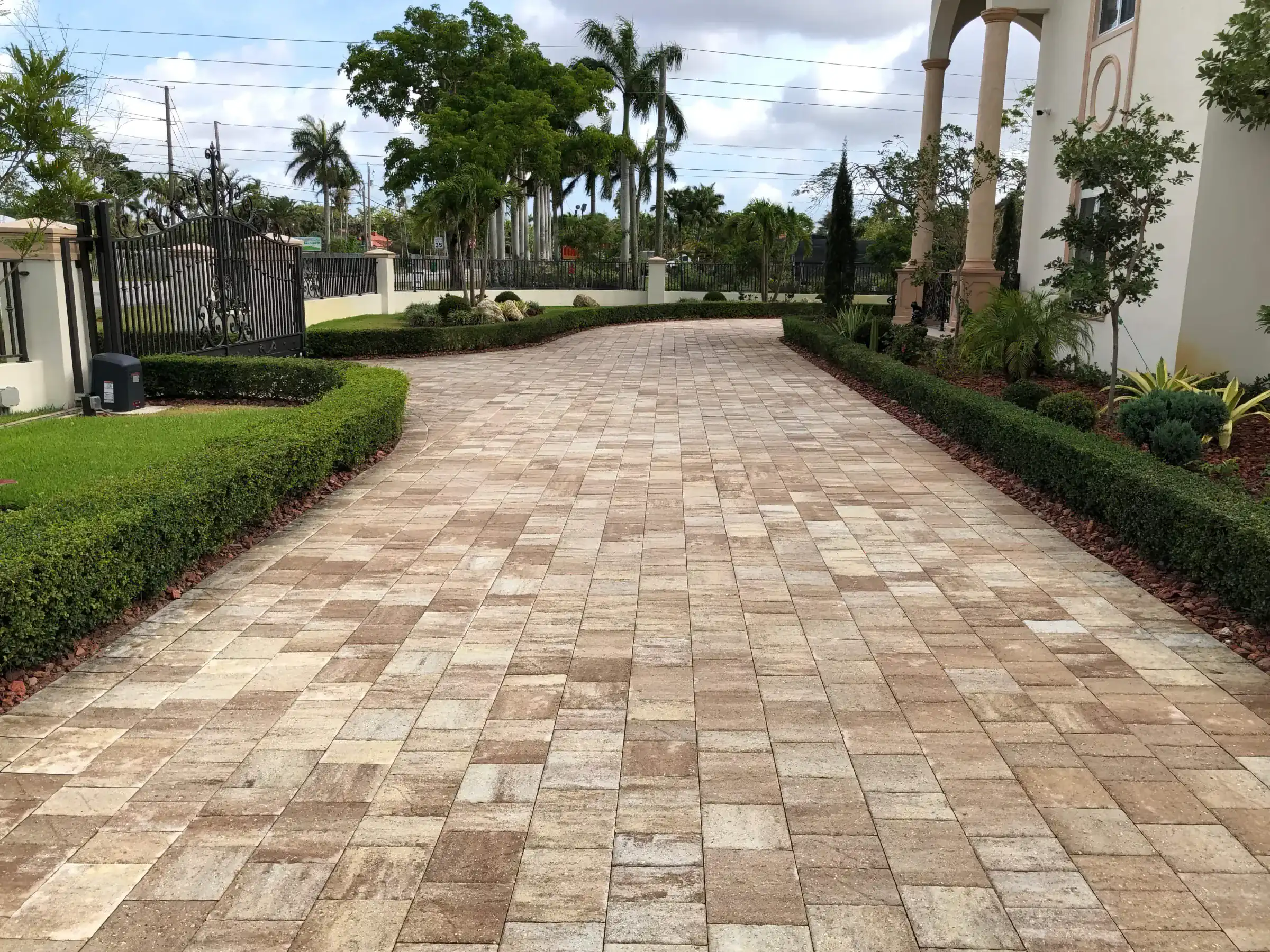
Broom, exposed aggregate or smooth concrete, straight or curved, or slabs split by grass joints.
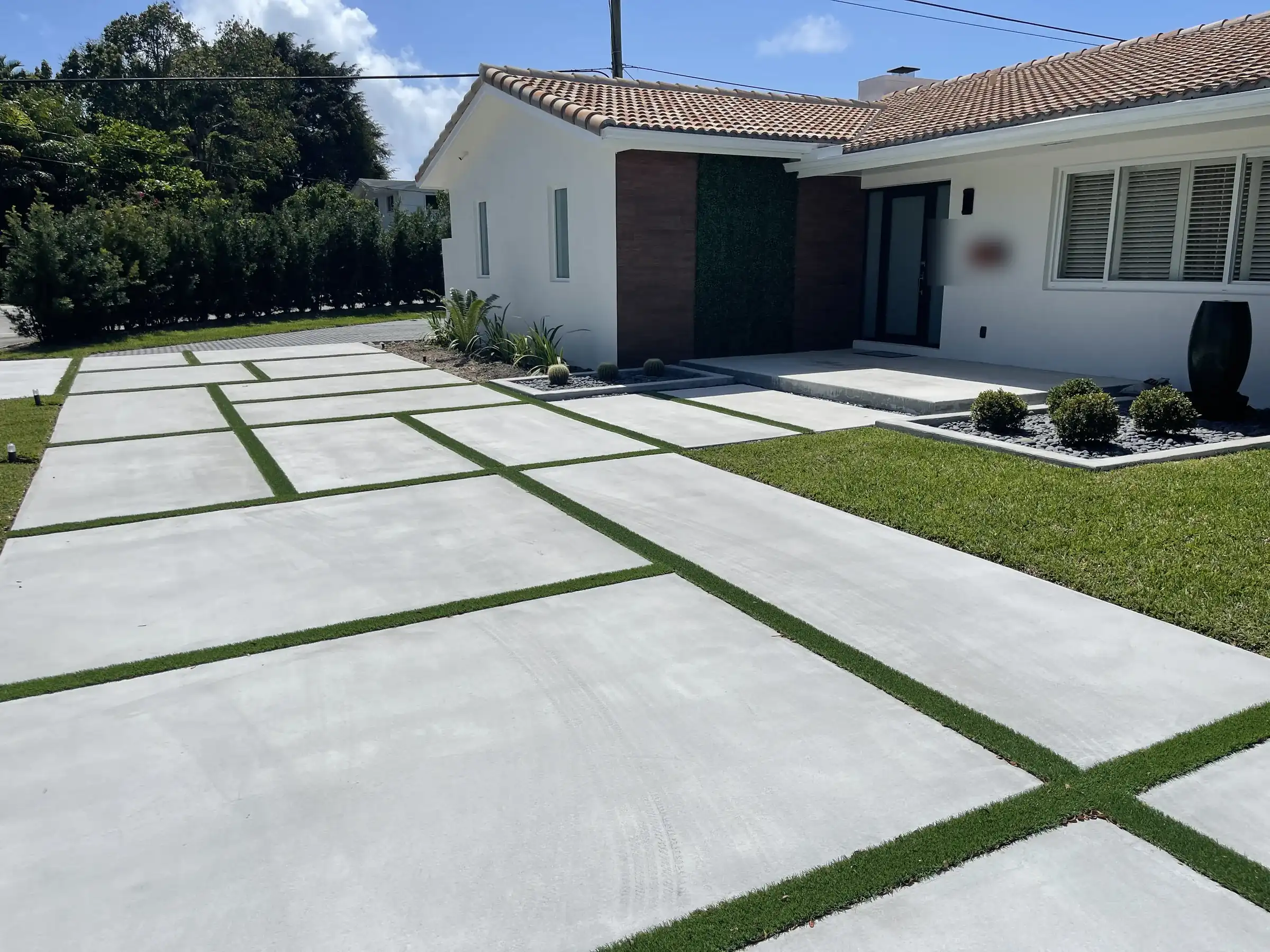
Large concrete slabs split by grass or turf joints, for a clean modern look.
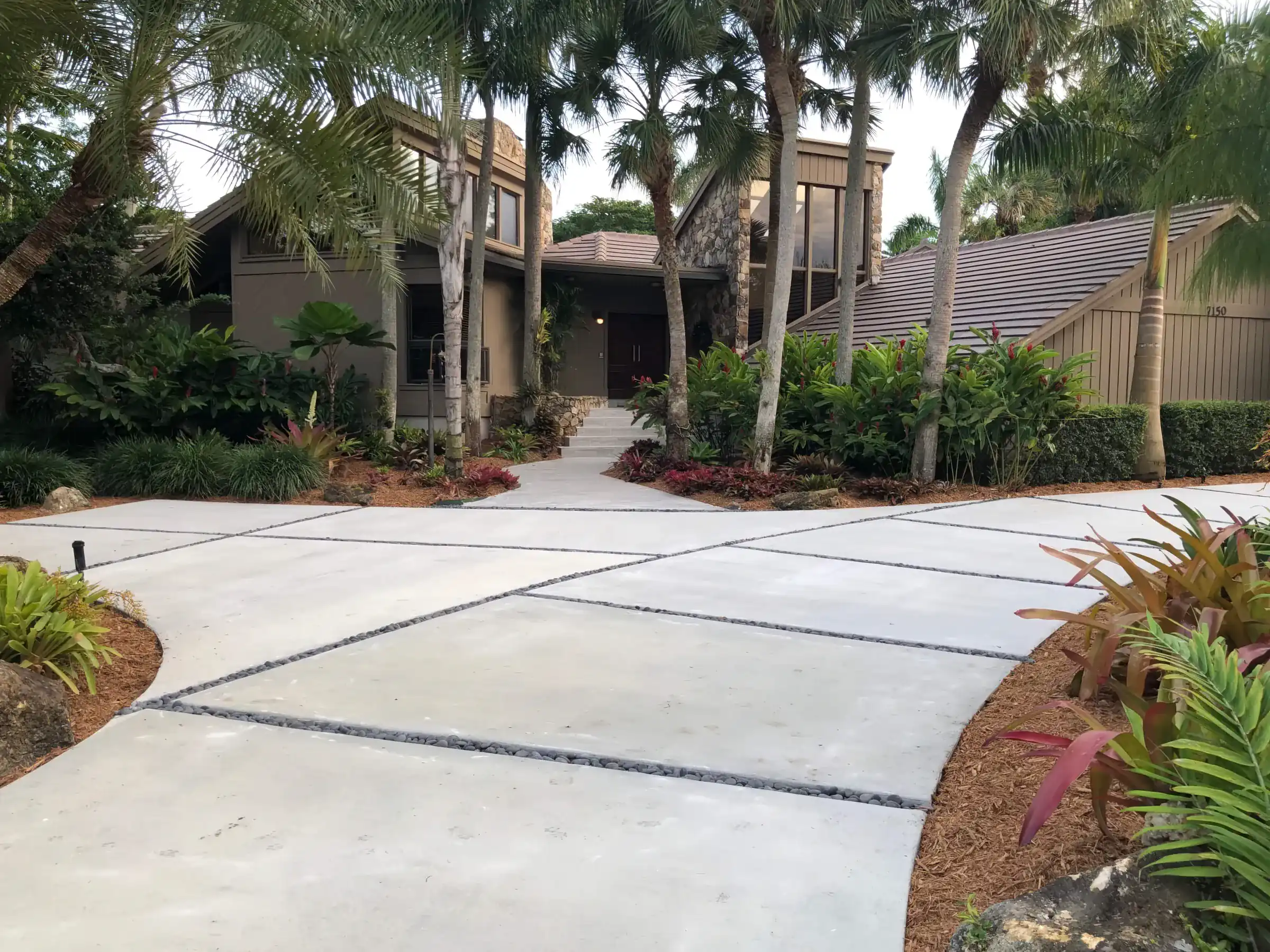
Concrete pressed with a pattern and color, for the look of stone at a concrete budget.
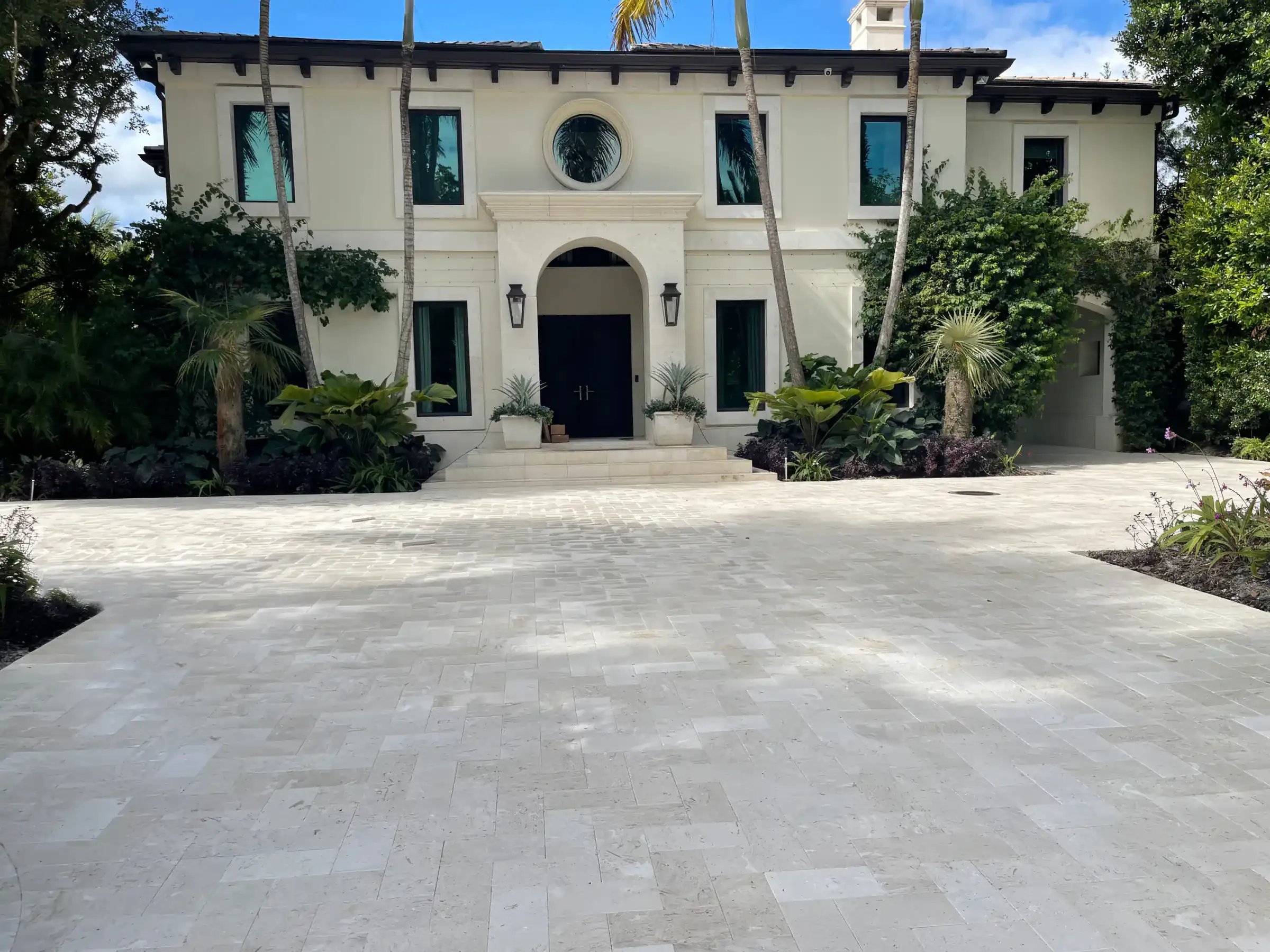
Natural stone that stays cooler underfoot and suits Mediterranean homes.
Couldn’t be happier with workmanship and timely work ethic. Very professional everything went smoothly and on schedule.
The team handled the permits and coordinated the city inspections seamlessly, which removed a lot of stress from the process.
FAQ
Still unsure? Call (305) 790-4850.
Miami-Dade County. Both are unincorporated, so the county's Public Works driveway permit process applies instead of a city building department.
Yes. Miami-Dade's driveway guidelines cover updating an existing residential driveway and ask for a survey, a photo of the current condition and the measurements of the new driveway, followed by a base inspection and a Public Works final inspection.
Yes. The county requires a Construction Covenant, recorded by the Clerk of the Court, for driveways other than asphalt or plain concrete, such as brick pavers, stamped concrete or slabs with grass in between.
The county's guide sets the driveway's interior width at 10 to 20 feet, keeps the interior edge at least 5 feet from the property line, and allows no more than two driveways or approaches, only in front of the house.
If the home is in an area controlled by a homeowners association, Miami-Dade asks for that association's approval document with the permit application.
Not without county authorization. Tree removal or relocation in unincorporated Miami-Dade needs a tree permit before the work.