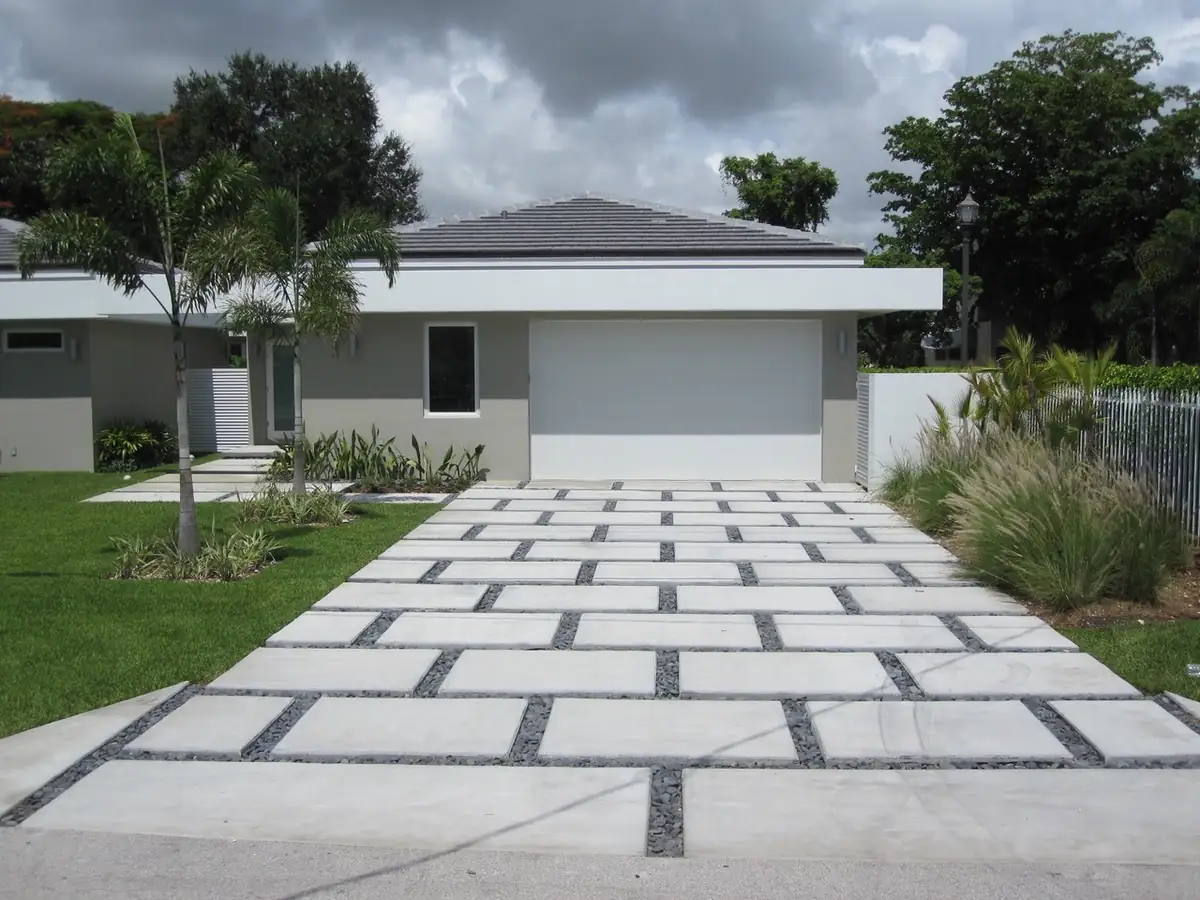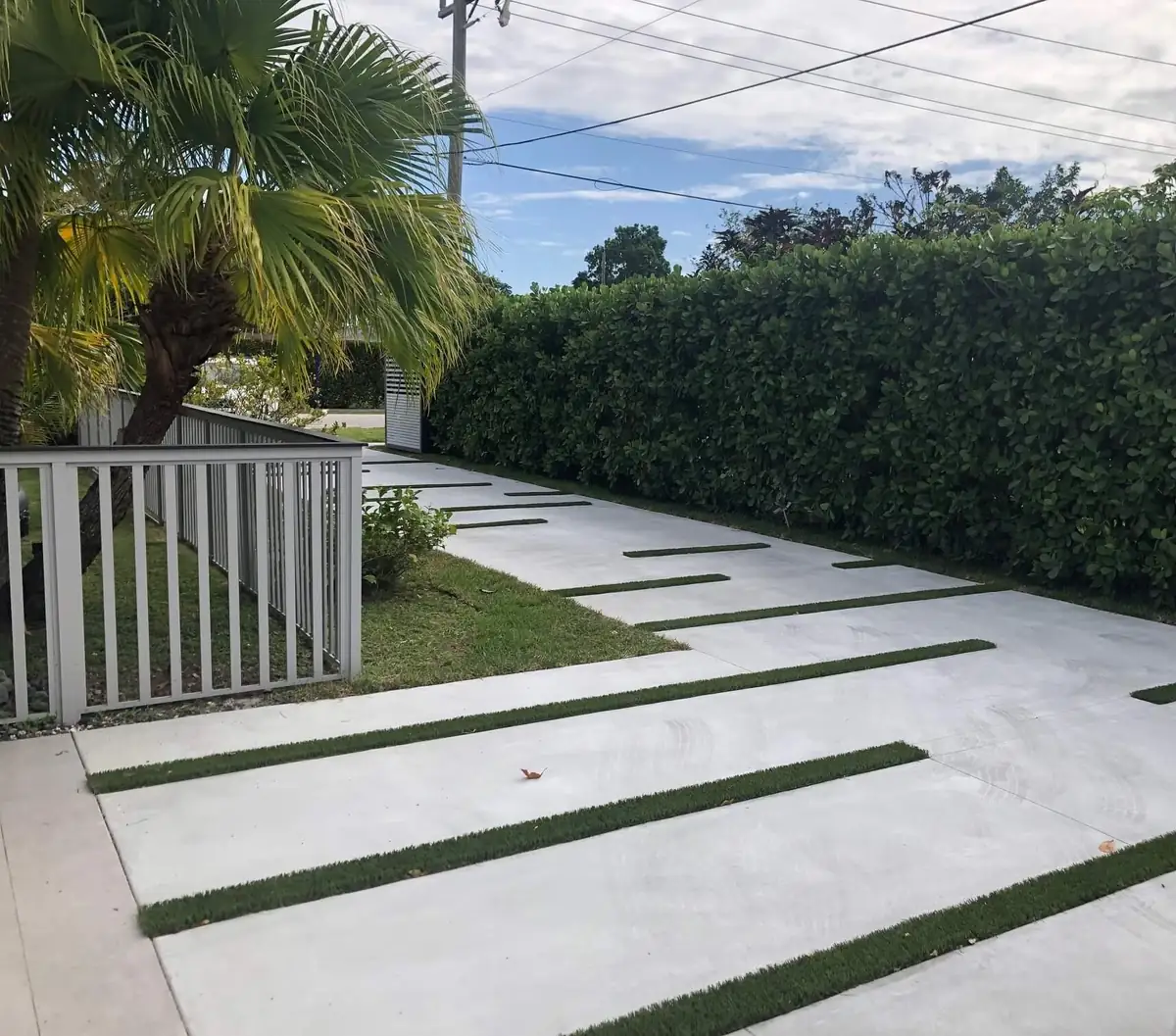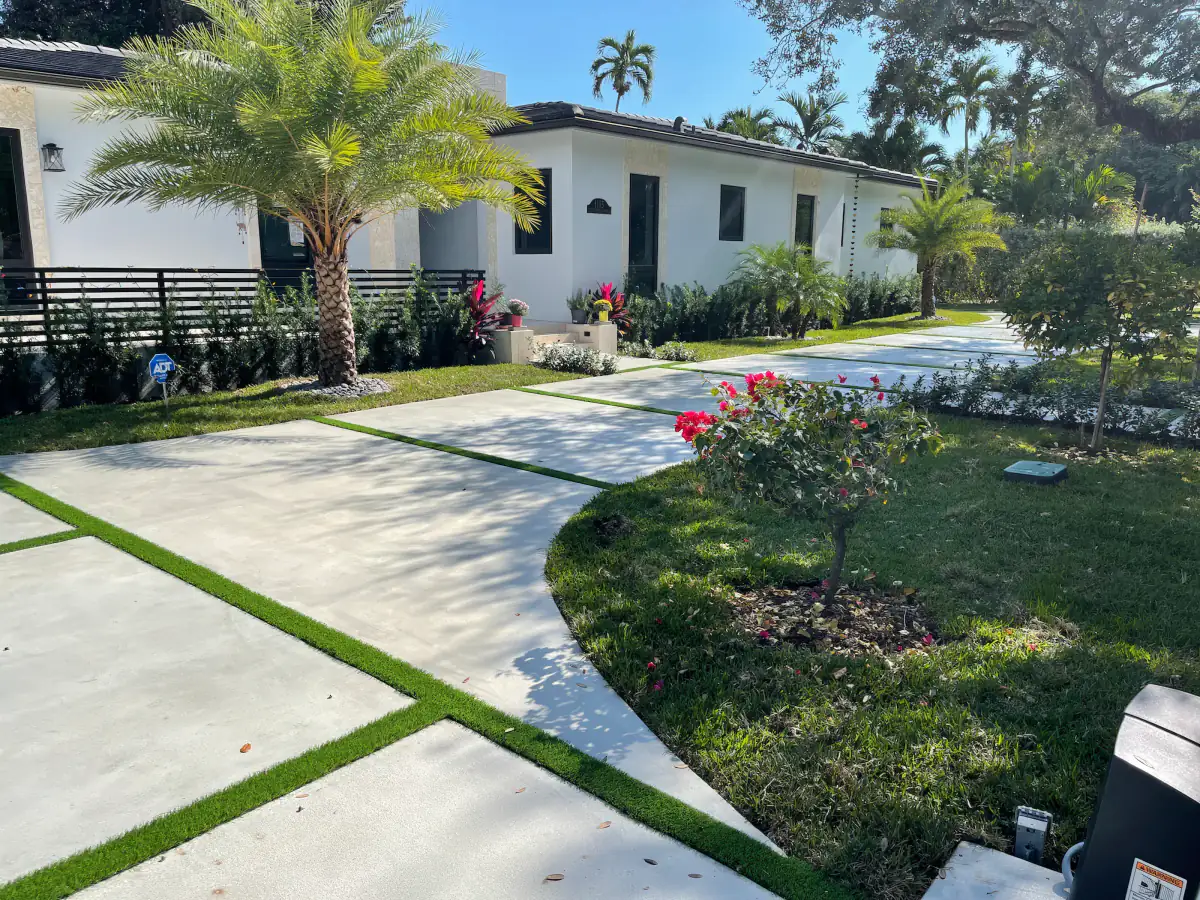
Curved concrete driveway with grass joints


Licensed General Contractor · CGC1529269
Broom, exposed aggregate or smooth concrete, straight or curved, or slabs split by grass joints.
4.6 on Google
Trusted by





The short answer
MiamiCrete pours concrete driveways for homes in Miami, FL, as a Florida certified general contractor (license CGC1529269). We replace old cracked driveways and build new ones in broom, exposed aggregate or smooth finishes, with straight or curved edges, and we handle the apron at the street and the permit. Call (305) 790-4850 for a free on-site estimate in writing.
Concrete driveways
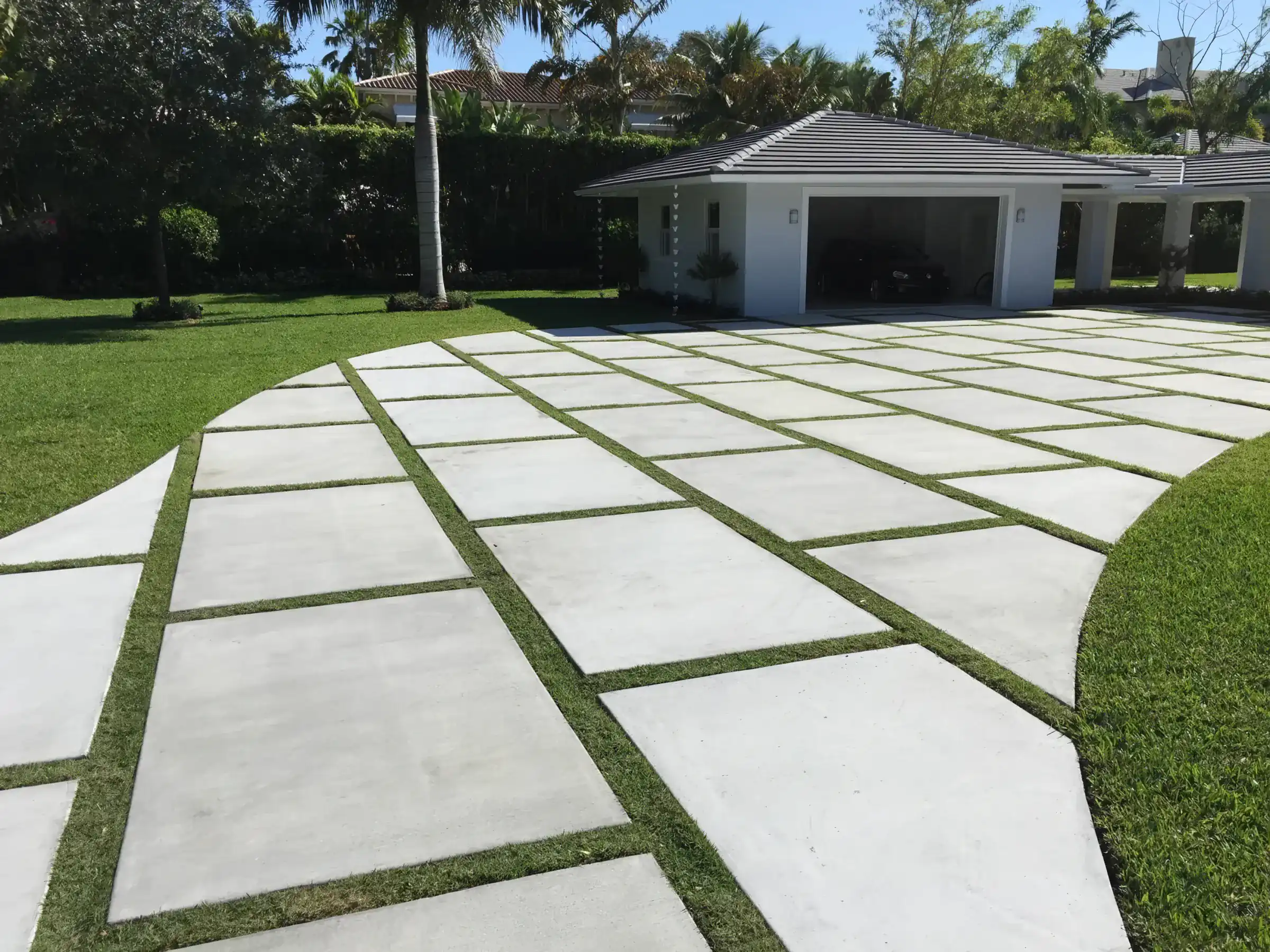
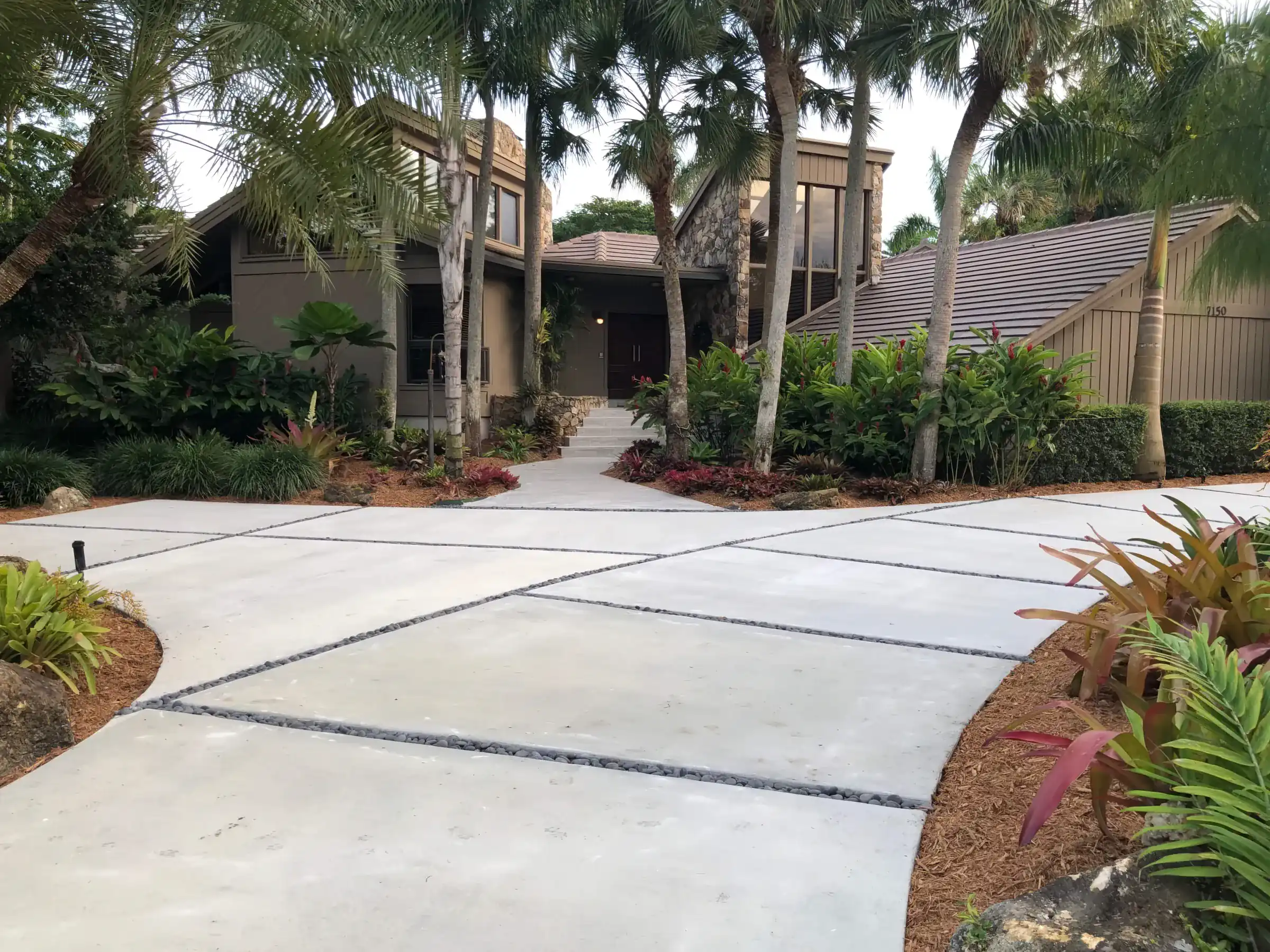
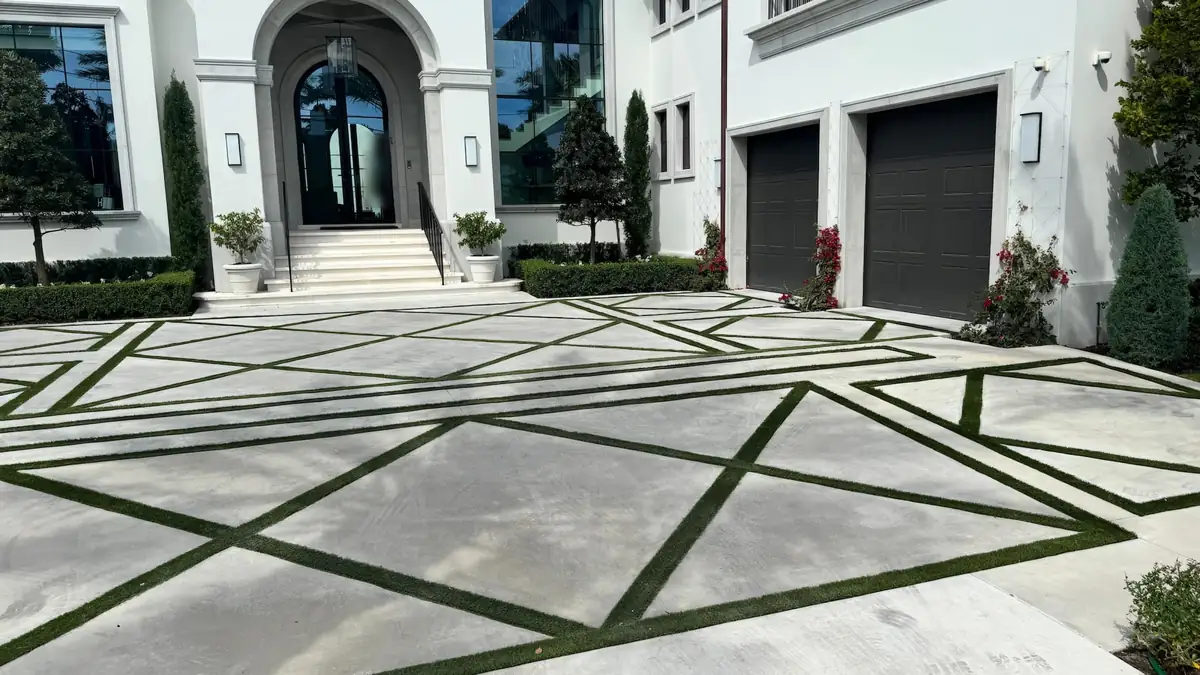
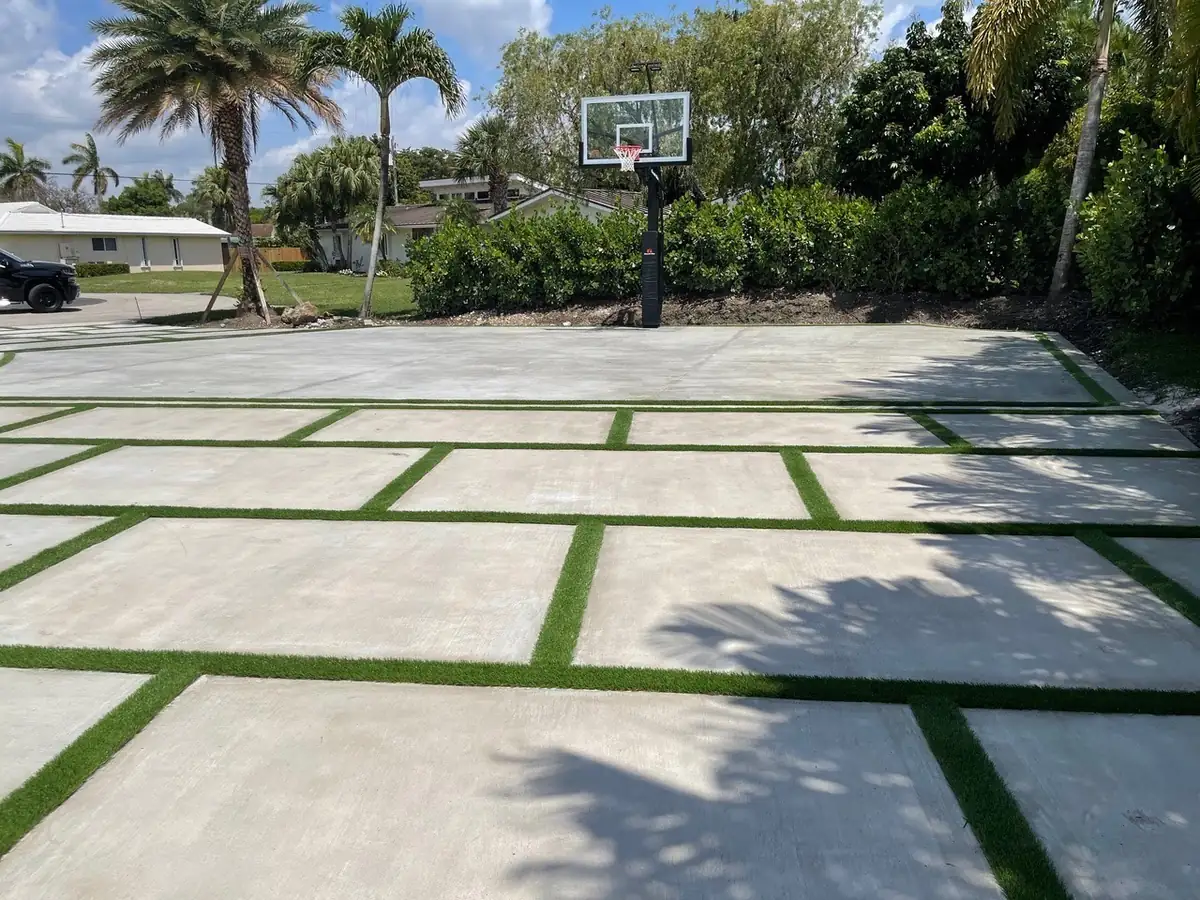
A poured concrete driveway is formed and finished on site over a prepared base. It can be one continuous surface with saw-cut joints, a curved drive, or large slabs split by grass or gravel joints for a modern look. On the visit we look at the slope and the drainage so water runs away from the house and the garage, and we talk through the finish you want.
Our work
Photos from our own jobs.
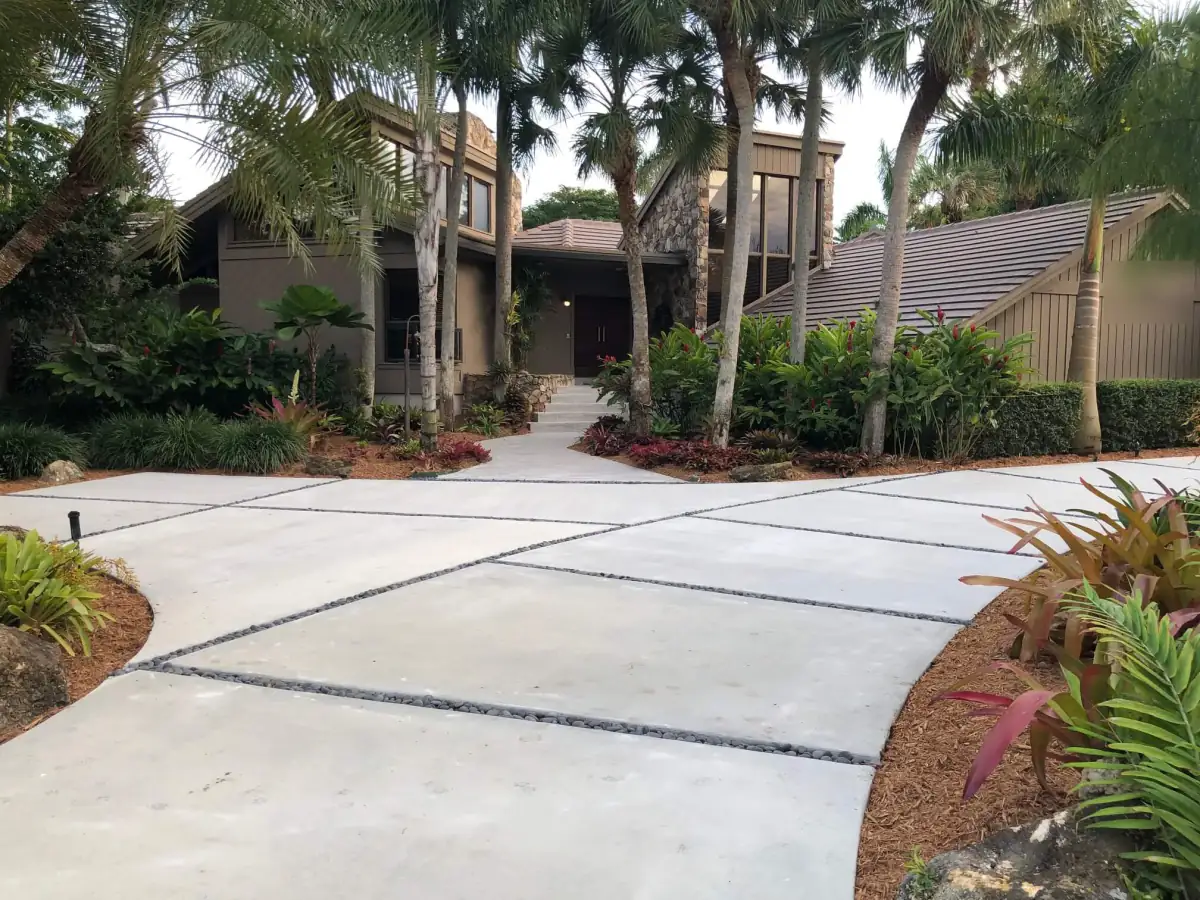
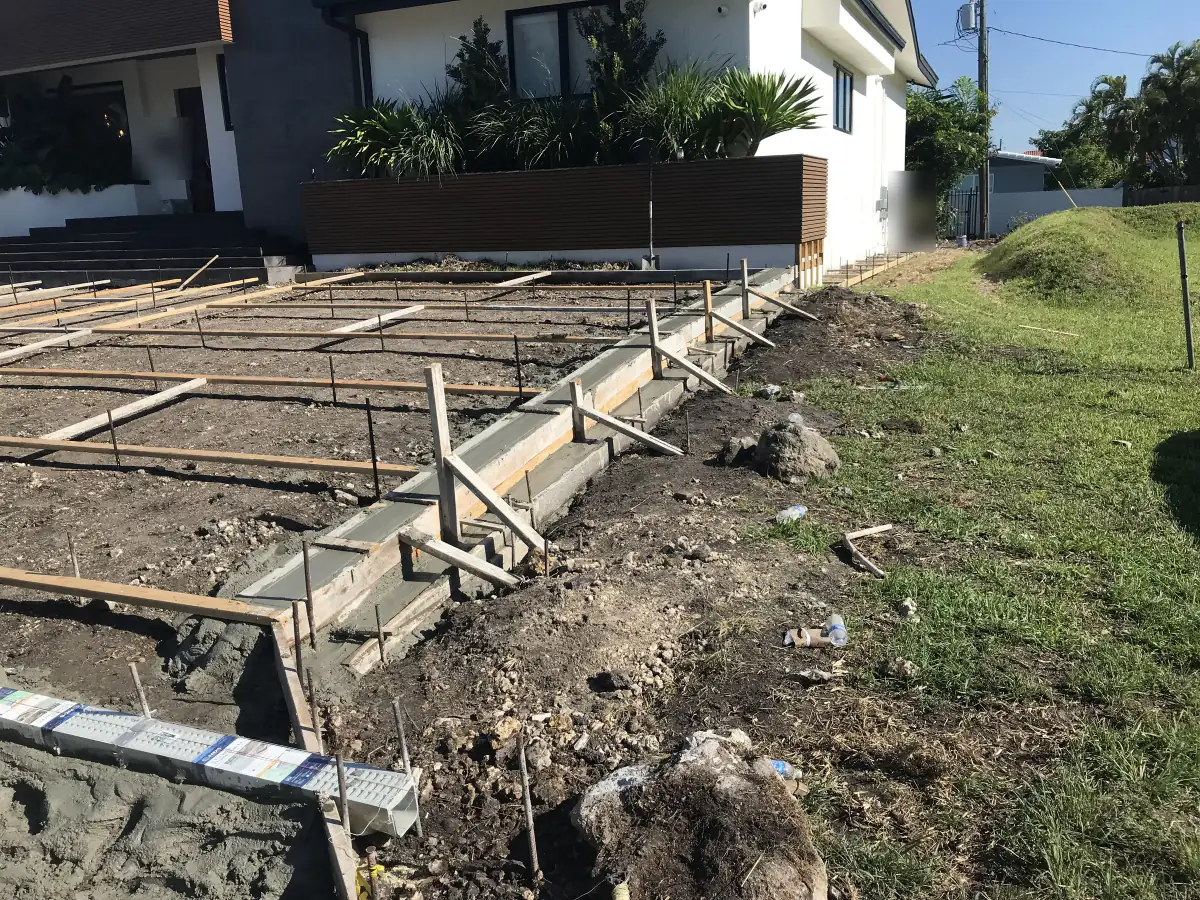
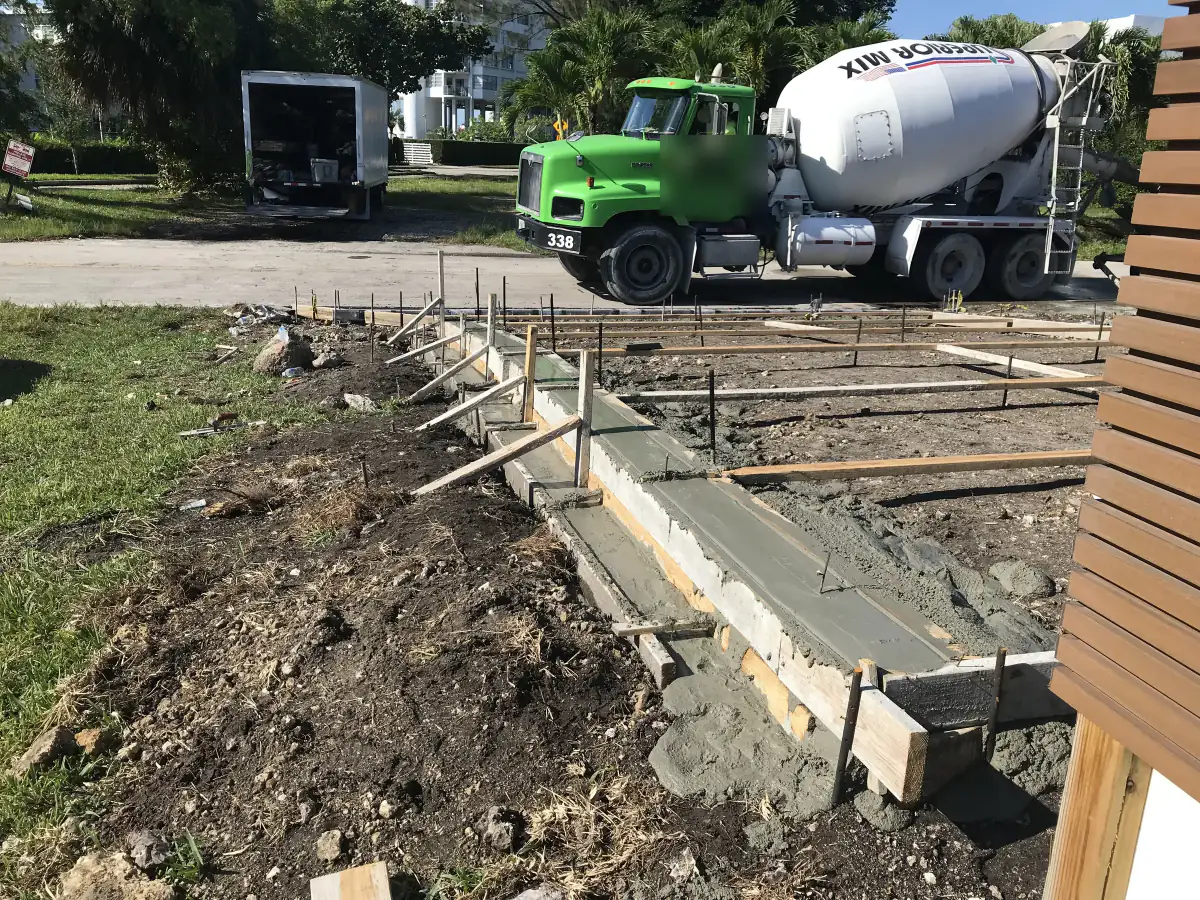
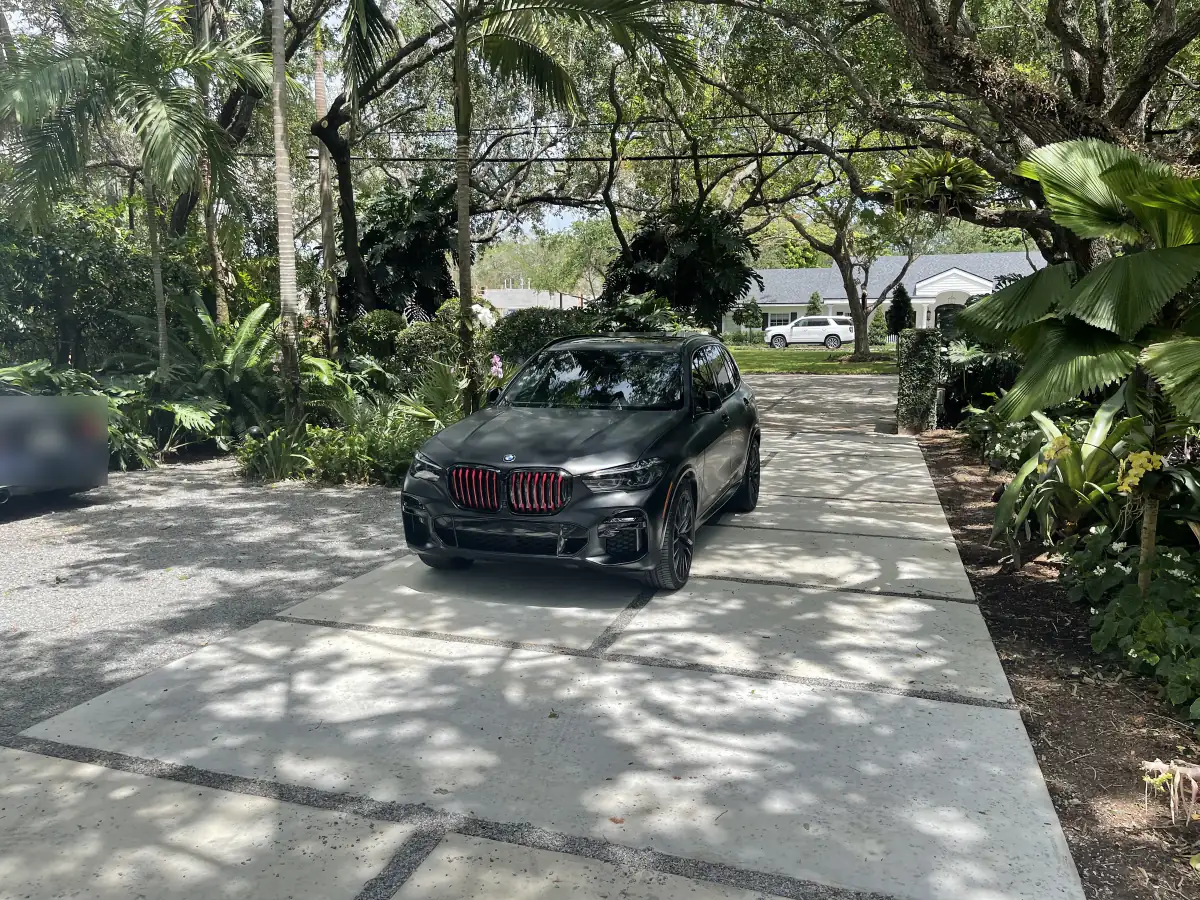
A broom finish is the most common: light lines brushed into the fresh surface give tires and shoes grip in the rain. Exposed aggregate shows the small stones in the mix for a textured, natural look. A smooth troweled finish looks the most modern but is less grippy when wet. For a pattern that looks like stone or brick, see stamped concrete; for a green grid, see slabs with grass joints.
The base matters as much as the concrete. Industry guidance from the Portland Cement Association names uniform support, held for the life of the pavement, as the main goal of the ground under a slab. So we remove the old surface, fix soft spots, and grade and compact the base before we set the forms. Whether the slab gets steel or fiber reinforcement, and its thickness, is set for your driveway and spelled out in the estimate.
Concrete shrinks as it dries and moves with the heat, so it cracks. Joints are planned lines where that crack happens out of sight. Industry guidance from NRMCA recommends joints at least a quarter of the slab deep and spaced no more than 24 to 36 times the slab thickness, about 10 feet for a 4 inch slab. We plan the joint layout before the pour so the lines also look right from the street.
Concrete sets faster as the temperature rises, and a hot, windy afternoon can dry the surface too fast and cause fine cracks. NRMCA guidance recommends planning the pour, avoiding the hottest part of the day when possible, and curing the slab: keeping it moist and protected after finishing so it reaches its designed strength. Heavy rain on fresh concrete can mar the surface, so the pour is planned around the forecast.
Yes. We break up and haul away the old concrete or asphalt, check the base for the soft spots and settling that often caused the cracks, fix the slope if water was pooling, and pour the new driveway. If only part of the driveway is damaged, we tell you on the visit whether a section can be replaced or the whole driveway should be redone.
The apron is the part of the driveway between your property line and the street, and it usually sits in the public right-of-way, the strip owned by the city or the county. Work there needs a permit from the city or from Miami-Dade Public Works, with its own rules on width, location and inspections. We include the apron in the plan and in the permit when your driveway needs it. MiamiCrete has worked in Miami for more than 20 years, so we know the permit rules of Miami-Dade County and of each city we work in. We prepare the paperwork, file the application and schedule the inspections for you. Inspectors know our work and our applications arrive complete, so the process moves without delays or surprises.
It depends on the size of the driveway and the concrete finish you choose. Installation usually takes between 4 and 10 business days depending on size and material. In the estimate we tell you when the new concrete is ready for foot traffic and for cars.
How it works
Step 2
We measure your driveway and give you a written estimate.
Step 3
We handle the permit and the build. Usually 4 to 10 business days.
Concrete or pavers
Drag the handle to compare two real MiamiCrete driveways at two different homes, not a before and after of the same house.
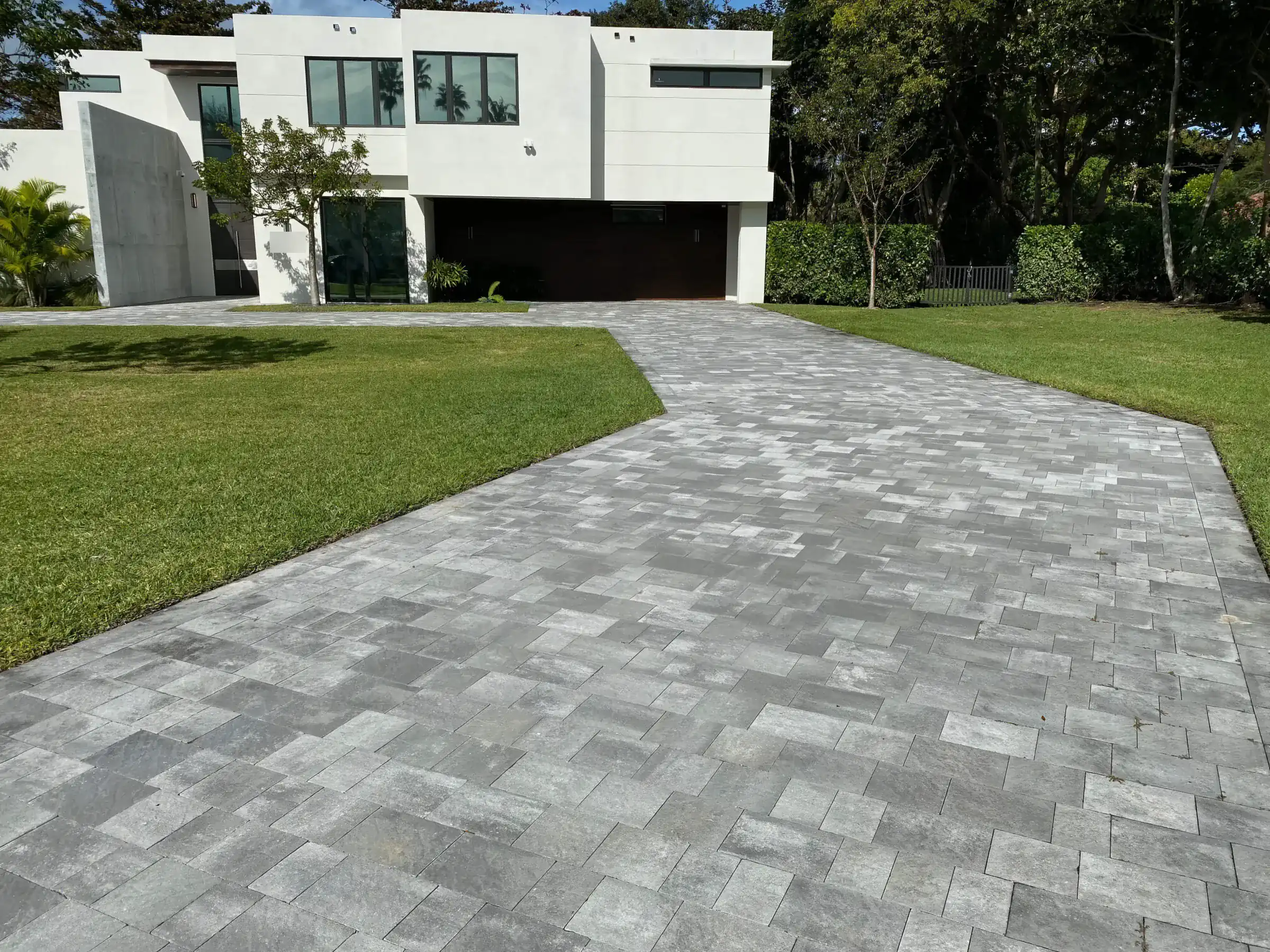
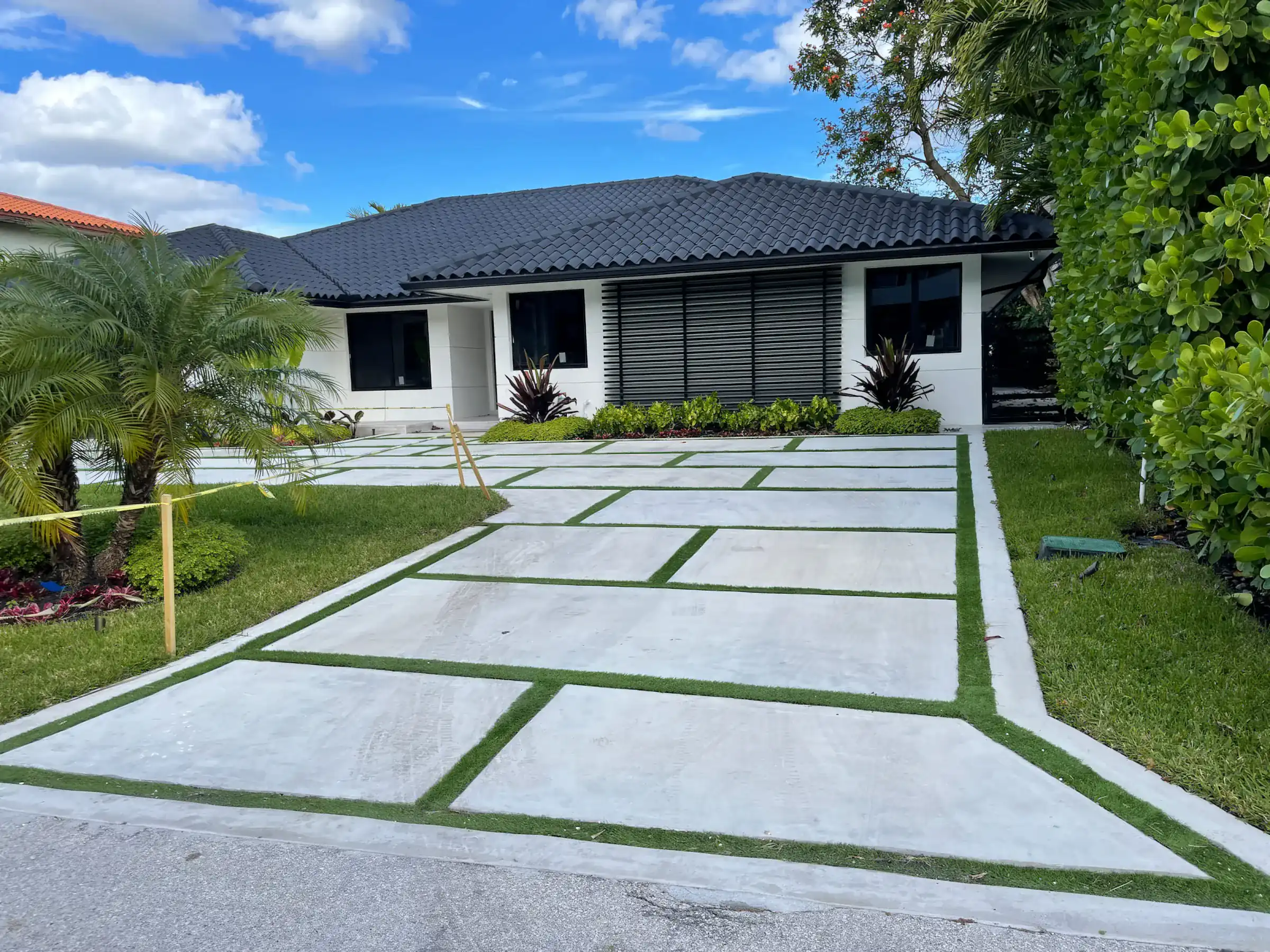
ConcreteSlabs with grass joints
PaversGray interlocking pavers
Recent work
Photos from our own jobs. No stock, no renders.
Took care of permitting and poured a driveway approach for us. They worked quickly and the quality of work is very good.
What used to be a cracked, worn-out stretch of old asphalt and bare dirt is now a stunning modern driveway with oversized concrete pads and clean turf strips in between.
We recently hired MiamiCrete to install a new concrete driveway, and we are very happy with the results. The quality of the concrete work is excellent and well-executed.
Yes. Slabs split by grass joints are one of the concrete driveways we build. See concrete slab driveways with grass joints.
It depends on the look, the budget and how you use the driveway. Concrete gives a continuous surface and clean modern lines; pavers can be lifted and replaced one by one. On the visit we explain both and show you real examples.
The usual causes are a base that settled or was never compacted evenly, joints missing or too far apart, water pooling at the edges, and tree roots. On the visit we look at what happened so the new driveway does not repeat it.
Yes. Breaking up and hauling away the old concrete or asphalt is part of the job and is included in the written estimate.
It depends on the size of the driveway and the concrete finish you choose. Installation usually takes between 4 and 10 business days depending on size and material. In the estimate we tell you when the new concrete is ready for foot traffic and for cars.
MiamiCrete has worked in Miami for more than 20 years, so we know the permit rules of Miami-Dade County and of each city we work in. We prepare the paperwork, file the application and schedule the inspections for you. Inspectors know our work and our applications arrive complete, so the process moves without delays or surprises.