
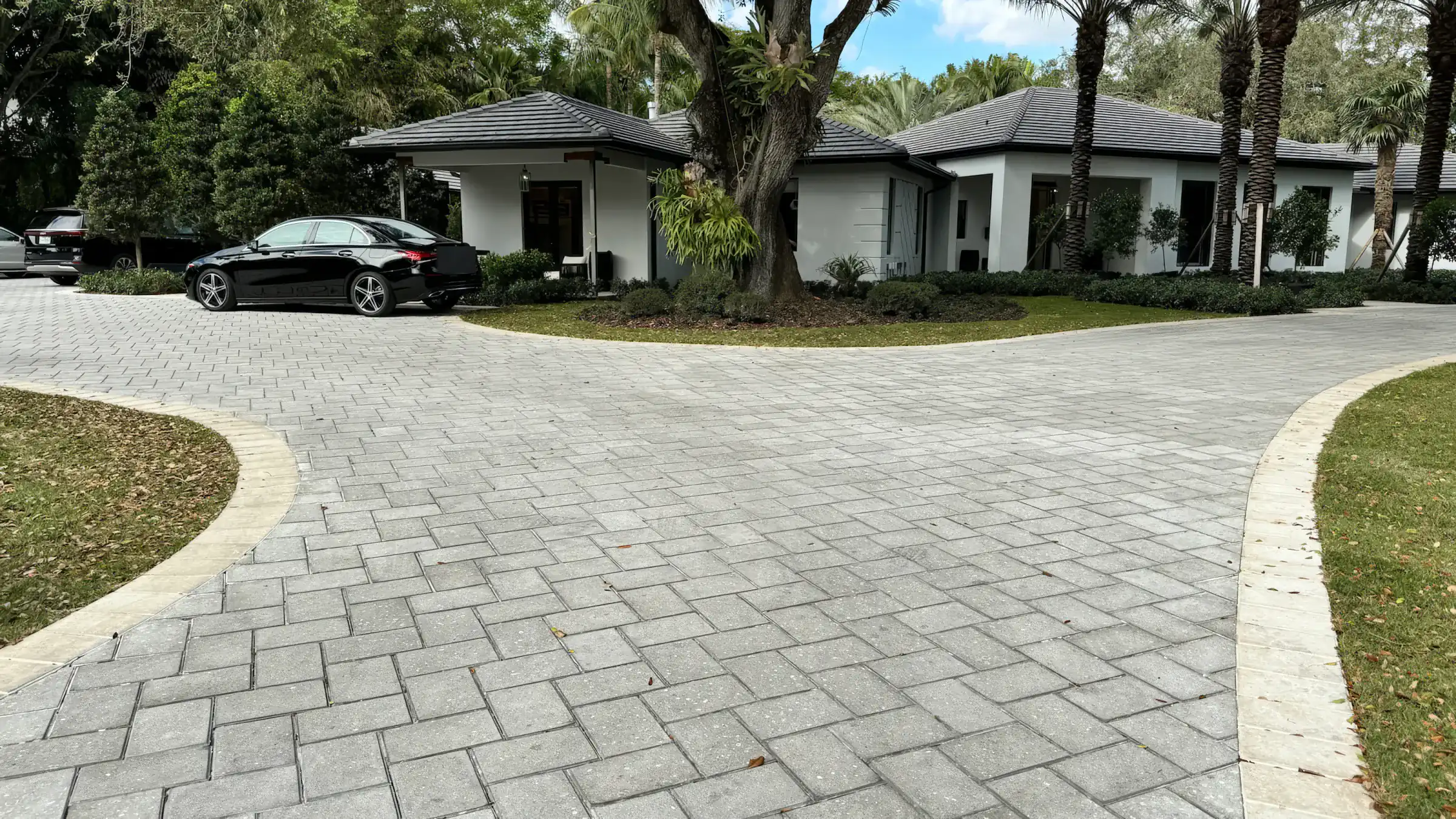
What are the advantages of pavers on a slope?
- Traction: the joints and textured surface give tires and shoes more grip than smooth concrete.
- Flexibility: interlocking pavers flex with small ground movement instead of cracking.
- Easy repair: a damaged or stained paver can be lifted and replaced without redoing the driveway.
- Drainage options: permeable paver systems can let some water soak through instead of running down the slope.
- Design: many colors, shapes and patterns.
What are the disadvantages?
- Installation is more demanding: the base, edges and drainage need extra attention.
- Shifting if done wrong: without proper restraint, pavers can creep downhill over time.
- Joint sand washout: fast-moving water can carry joint sand away unless the joints are stabilized.
- Maintenance: joints need checking, and weeds can appear without upkeep.
- Upfront cost: pavers usually cost more to install than plain concrete. Ask for written quotes for both.
How are pavers installed on a sloped driveway?
- Excavation and grading: remove the old surface and organic soil, and shape the slope evenly.
- Base: place crushed aggregate in layers and compact each one. On a slope, compaction quality is what keeps everything in place.
- Edge restraints: install solid edging along the sides, and a firm restraint at the bottom of the slope, where pavers want to push.
- Bedding layer: screed a thin, even layer of sand.
- Pattern: lay pavers in an interlocking pattern suited to vehicle traffic.
- Joints: fill joints with sand, often polymeric sand that hardens to resist washout and weeds.
- Compaction: run a plate compactor over the surface to lock the pavers together.
- Drainage: add drains or channels at the bottom or across the slope where water collects.
Which paver pattern is best for a sloped driveway?
| Pattern | Interlock under traffic | Notes for slopes |
|---|---|---|
| Herringbone (45 or 90 degrees) | Strongest | The standard recommendation for driveways and slopes |
| Running bond, laid across the slope | Moderate | Better when rows run across the slope rather than down it |
| Basket weave | Weaker | More decorative, less suited to vehicles on a slope |
| Random or multi-size patterns | Varies | Depends on the product; ask the manufacturer's guidance |
How do you stop water from washing out a sloped paver driveway?
- Stabilize joints with polymeric sand
- Add a drain or trench drain where water concentrates, often at the bottom near the garage or street
- Make sure water from roofs and gutters is not dumped onto the top of the driveway
- Consider a permeable paver system where the soil and site allow it
Miami rain comes hard and fast, so water management is part of the design, not an afterthought.
When is a slope too steep for pavers?
Very steep driveways may need special measures such as deeper restraints, concrete bands across the slope or a different surface. A contractor should assess the slope on site and explain the options.
What should I ask a contractor before a sloped paver driveway?
- Have you installed pavers on a slope like mine? Can I see one?
- What base material and compaction method will you use?
- What edge restraint will hold the bottom of the slope?
- Which pattern do you recommend, and why?
- How will you handle the water?
- What does your written warranty cover?
See also how to find a good general contractor in Miami.
Have a sloped driveway?
MiamiCrete (Florida license CGC1529269) installs paver driveways in Miami. Comparing materials? Read concrete vs paver driveways. When you are ready, request a free written quote or call (305) 790-4850.
Frequently Asked Questions
Can pavers be used on a steep driveway?
Pavers work on most sloped driveways when the base, edge restraints, pattern and drainage are designed for the slope. Very steep driveways may need extra measures, so have the slope assessed on site.
What is the best paver pattern for a sloped driveway?
Herringbone gives the strongest interlock under vehicle traffic and is the usual recommendation for slopes.
Why do pavers shift on a slope?
Usually because of weak base compaction, missing or weak edge restraints, or water washing out the joint and bedding sand.
Are pavers less slippery than concrete on a slope?
The joints and textured surfaces of pavers generally give more grip than a smooth concrete finish. Avoid glossy sealers on slopes.
Do sloped paver driveways need drains?
Often yes. A drain at the bottom of the slope or where water concentrates keeps it from washing out joints and pooling near the garage.