
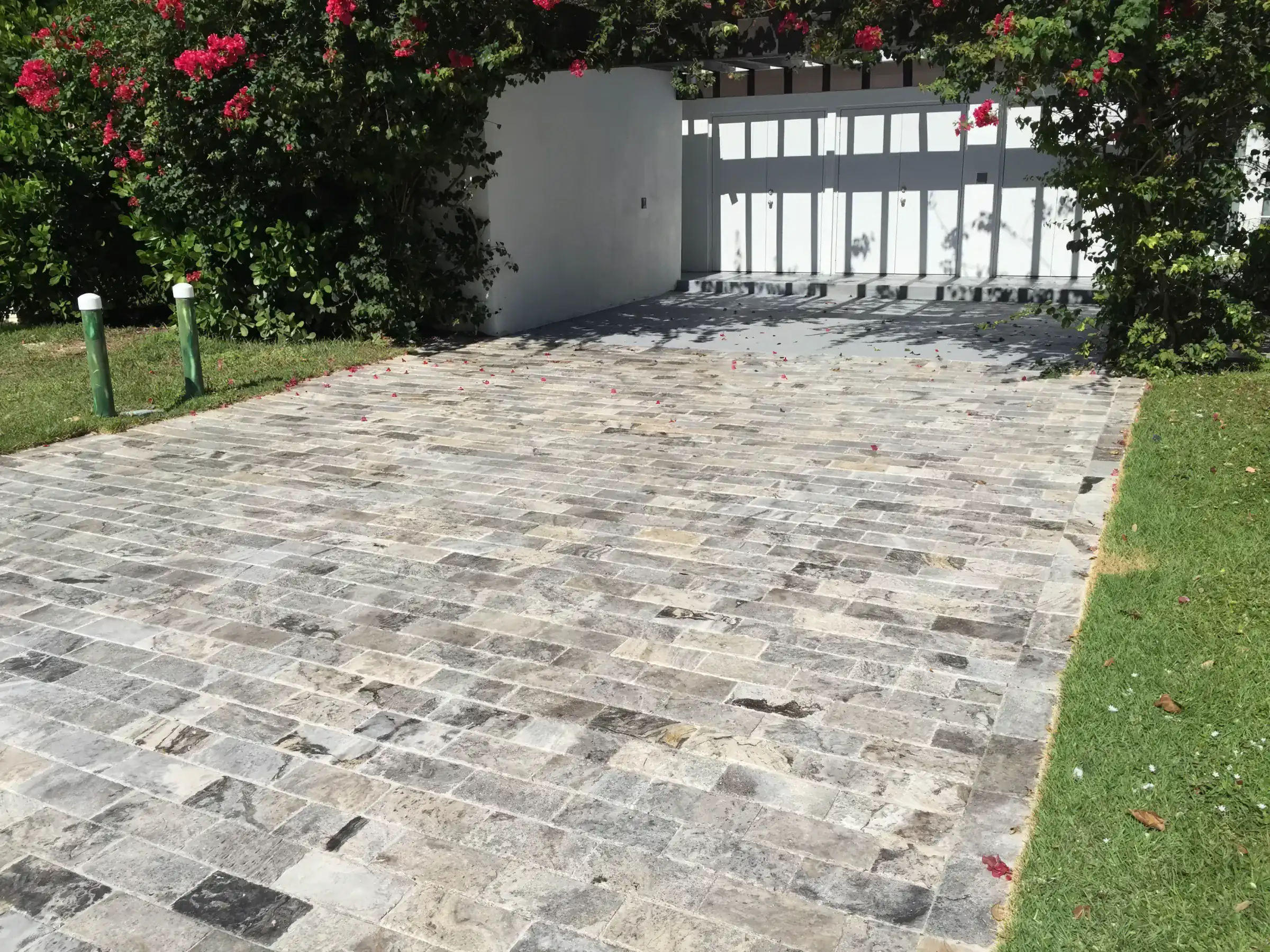
How do I assess my current patio before remodeling?
Look for problems that have to be fixed before anything new goes on top:
- Cracked or sunken concrete, or pavers that rock or have shifted
- Standing water after rain, or water running toward the house
- Tree roots lifting the surface
- Mold, algae or efflorescence that point to moisture problems
- Loose steps, edges or coping
- Damaged supports on any existing pergola or cover
Laying a new surface over a failing base just hides the problem for a while.
What is the best patio surface for Miami's climate?
| Surface | Heat underfoot | Grip when wet | Upkeep | Look |
|---|---|---|---|---|
| Travertine (tumbled or brushed) | Stays comparatively cool | Very good | Sealing, pH-neutral cleaning | Natural stone, high-end |
| Concrete pavers (light colors) | Cooler in light colors | Good with texture | Joint sand, optional sealing | Many styles |
| Plain or broom-finish concrete | Cooler in light colors | Good with a textured finish | Cleaning, sealing | Clean, simple |
| Stamped concrete | Depends on color | Depends on pattern and sealer | Regular resealing | Stone or brick look |
| Concrete slabs with turf joints | Cooler in light colors | Good | Turf care | Modern |
| Wood decking | Can get hot, weathers | Can be slippery | High in humidity | Warm look |
For areas around a pool, see which pavers are most slip-resistant around pools.
How do I get drainage right on a Miami patio?
- Slope the patio away from the house.
- Send water toward lawn, planting beds or drains, not toward neighbors.
- Add drains in low spots and where roof water lands.
- Consider permeable pavers where soil and site allow.
- Keep the patio surface below door thresholds so water cannot run inside.
What layout works best for outdoor living?
Think about how you will use the space: dining, lounging, cooking, kids, pool traffic. Leave clear walking paths, place seating where there is shade in the afternoon, and connect the patio to the house with a wide, level transition. Defining zones with a change in paver pattern or a border is a simple way to organize a larger patio.
How do I add shade?
- Pergolas for filtered shade and a frame for fans and lights
- Retractable awnings that fold away during storms
- Shade sails for flexible coverage
- Trees and palms placed so roots stay clear of the patio
In hurricane season, anything that can catch wind needs to be rated, anchored and permitted correctly, or designed to come down before a storm.
Which plants and lighting suit a Miami patio?
Native and Florida-friendly plants such as coontie, firebush, muhly grass, gumbo limbo and saw palmetto handle heat and rain with less care. Keep large roots away from paving. For lighting, low-voltage LED path lights, step lights and uplights on palms extend evening use; outdoor electrical work should be done by a licensed electrician.
What furniture holds up in heat and humidity?
Choose powder-coated aluminum, teak or high-quality resin, with quick-drying, fade-resistant fabrics. Avoid untreated steel near the coast.
Do I need a permit for a patio remodel?
Often, yes. New or expanded paving, roofed structures, pergolas in some cities, electrical and gas work usually require permits, and HOAs may have their own approval. Requirements vary by city: see understanding Miami building codes.
How should I budget a patio remodel?
Price depends on the size, demolition, base, drainage, the material you choose, shade structures, electrical work and permits. Decide your priorities (surface, shade, kitchen, lighting), get itemized written quotes, and build in room for surprises under the old surface.
Planning new paving for your patio?
MiamiCrete's core work is driveways in pavers, concrete, stamped concrete and travertine, built on the same base and drainage principles a patio needs. Licensed as CGC1529269. Tell us about your patio when you request a free written quote, or call (305) 790-4850.
Frequently Asked Questions
What is the best patio material for Miami?
Travertine, light-colored concrete pavers and textured concrete handle heat and rain well. Light colors and textured finishes stay cooler and grip better when wet.
How do I stop water from pooling on my patio?
Slope the patio away from the house, add drains in low spots, direct roof water away and consider permeable pavers where the site allows.
Do I need a permit to redo my patio in Miami?
Often yes, especially for new or larger paved areas, roofed structures, electrical and gas work. Rules vary by city, and HOAs may need to approve too.
What plants are good around a Miami patio?
Native and Florida-friendly plants such as coontie, firebush, muhly grass, gumbo limbo and saw palmetto, placed so roots stay clear of the paving.
How do I make a patio cooler?
Use light-colored or travertine surfaces, add shade with a pergola, awning or shade sail, and plant trees where their roots will not lift the paving.