
What makes a paver slip-resistant when wet?
A wet surface is slippery when a thin film of water sits between your foot and the surface. Texture breaks up that film. Three things matter:
- Surface texture: tumbled, brushed, flamed or textured finishes grip; polished finishes do not.
- Porosity: porous materials such as travertine absorb some surface water.
- Joints: joints between pavers add edges that help with grip and let water drain.
The finish of the sealer matters too. A high-gloss sealer can make a good paver slippery. Ask for a non-gloss product or an anti-slip additive on pool decks.
How do pool paver materials compare?
| Material | Grip when wet | Heat underfoot | Upkeep in Miami | Notes |
|---|---|---|---|---|
| Textured concrete pavers | Good, texture is built in | Depends on color; light colors stay cooler | Joint sand checks, optional sealing | Many colors and shapes |
| Travertine (tumbled or brushed) | Very good | Stays comparatively cool | Sealing helps resist stains | Avoid polished travertine outdoors |
| Clay brick | Good, improves as surface weathers | Moderate | Can grow algae in shade; regular cleaning | Classic look |
| Granite (flamed or bush-hammered) | Very good with the right finish | Darker colors get hot | Very durable | Polished granite is not for pool decks |
| Sandstone | Good natural texture | Moderate | Needs sealing in humid climates | Softer than granite |
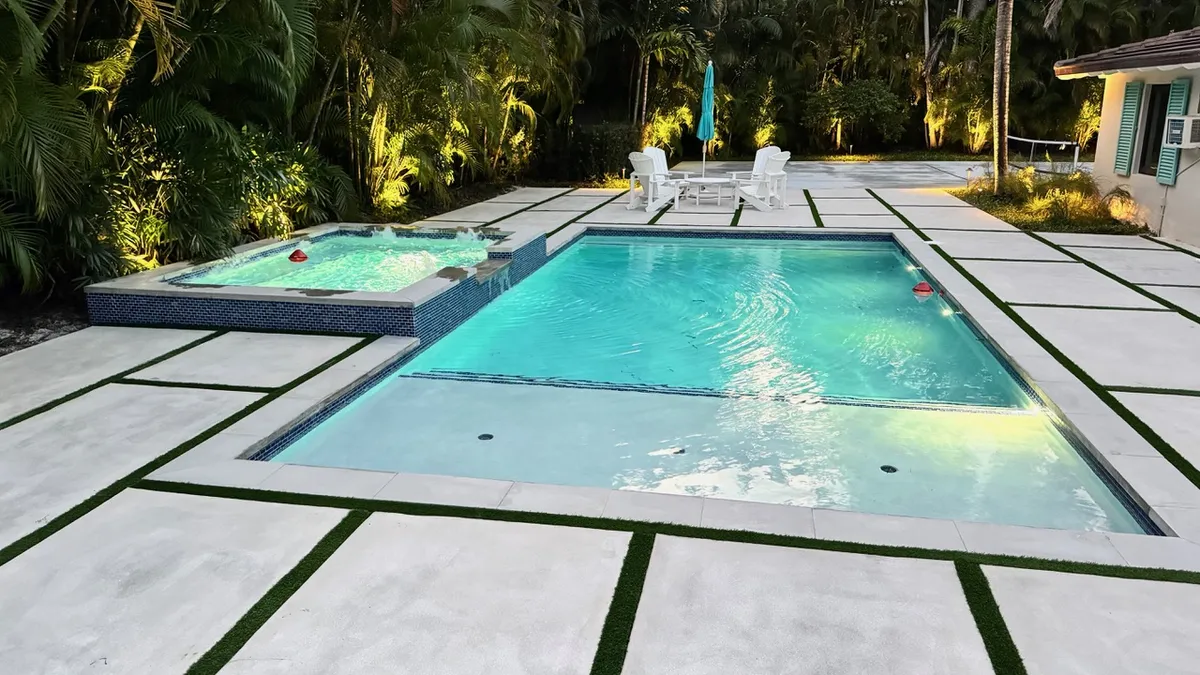
| Concrete slabs with grass or turf joints | Good with a broom or textured finish | Light concrete stays cooler | Turf or grass care in the joints | Modern look, as in the photo above |
Prices for every option depend on the material, deck size, access and base work, so ask for a free written quote rather than relying on a chart.
Which paver stays coolest around a pool in Miami?
Travertine is the usual choice when heat is the main concern, because its color and porosity keep it comparatively cool. Light-colored concrete pavers and light concrete also stay cooler than dark surfaces. Dark granite and dark pavers absorb the most heat.
See our guide to travertine pavers in Miami and our travertine page.
How should a pool deck be installed so it stays safe?
The best pavers fail if the installation is poor.
- Compacted base: prevents settling that creates trip edges.
- Slope away from the pool: the deck should shed water toward drains or landscaping, not back into the pool or toward the house.
- Drains where needed: deck drains catch water on larger decks.
- Secure coping: the edge stones at the pool must be set firmly.
- Stable joints: polymeric sand resists washout and weeds.
- Right sealer: penetrating or non-gloss sealers that keep the surface texture.
What problems do Miami pool decks run into?
- Efflorescence: a white powdery film from salts in the material. It can be cleaned, and the right sealer helps reduce it.
- Algae and mildew: common in shaded, wet corners. Regular cleaning keeps them under control.
- Fading: strong sun fades some pigments. Ask for UV-stable products.
- Salt and chlorine: splash-out can affect some stone and sealers. Rinse the deck and follow the manufacturer's care guide.
- Joint sand loss: heavy rain and pressure washing remove sand; refill it to keep pavers locked.
Should I seal a pool deck?
Often yes, especially travertine and other porous stone, to resist stains and salt. Choose a sealer that does not create a gloss film, or add an anti-slip additive. See why sealing matters in Florida.
Thinking about pavers for your home?
MiamiCrete (license CGC1529269) installs pavers, concrete and travertine in Miami, and the same base and drainage work applies around a pool. Ask about your pool area when you request a free written quote or call (305) 790-4850.
Frequently Asked Questions
What is the least slippery paver for a pool deck?
Textured surfaces grip best: tumbled or brushed travertine, flamed granite, textured concrete pavers, clay brick and sandstone. Avoid polished stone and glossy sealers.
Is travertine slippery when wet?
Tumbled or brushed travertine has good grip when wet. Polished travertine is slippery and is not recommended for pool decks.
What pool deck surface stays coolest in Miami?
Travertine and light-colored pavers or concrete stay coolest. Dark stone and dark pavers get the hottest.
Does sealing pavers make them slippery?
A high-gloss sealer can. Use a penetrating or non-gloss sealer, or add an anti-slip additive, on pool decks.
Which way should a pool deck slope?
Away from the pool, toward drains or landscaping, so water does not run into the pool or toward the house.