
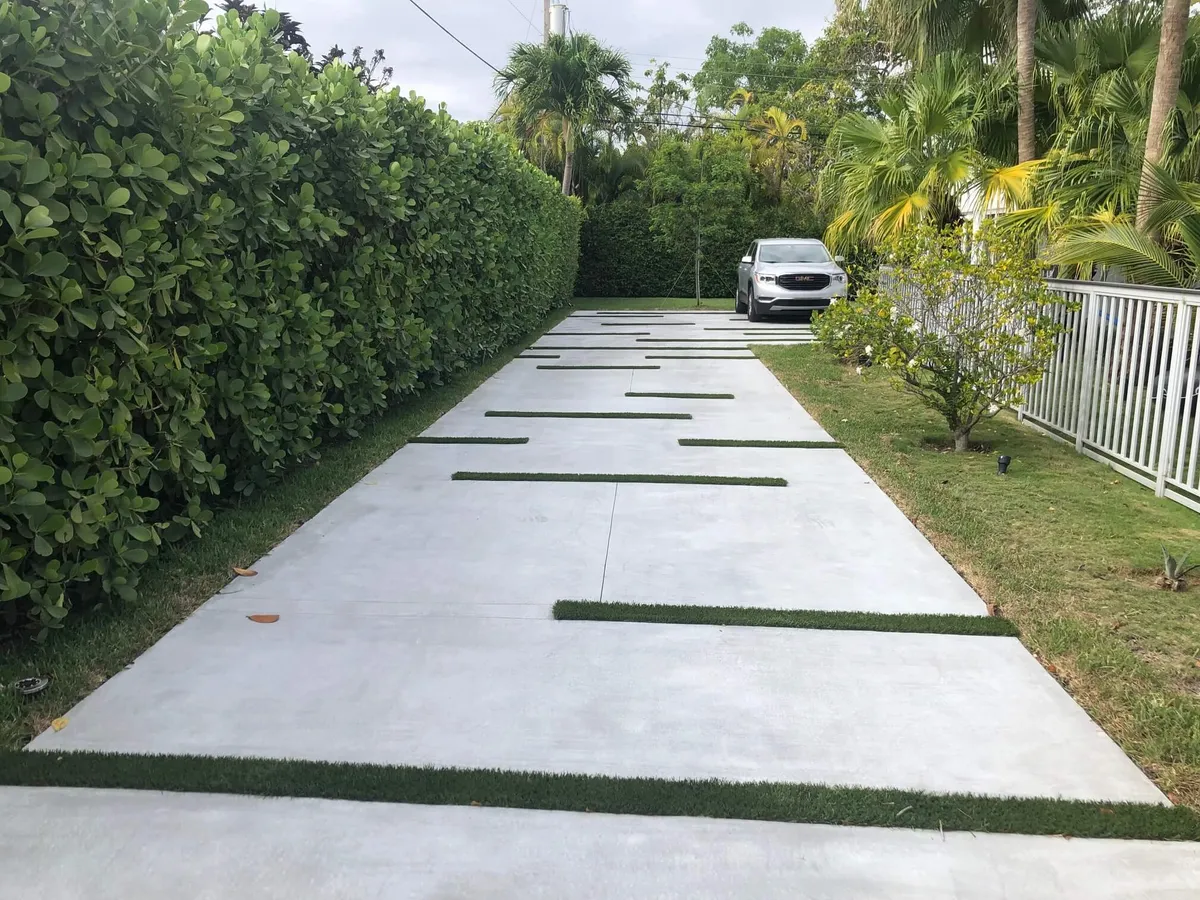
What does a driveway sealer actually do?
A sealer is a protective coating or treatment applied to concrete, pavers or stone. Depending on the type, it:
- Keeps water from soaking into the surface
- Slows color fading from the sun
- Makes oil, rust and organic stains easier to clean
- On pavers, helps stabilize the joint sand and discourages weeds
- Can enhance color, from a natural look to a "wet look"
Why does sealing matter more in Florida?
Because the weather works on the surface all year.
- UV: strong sun breaks down unprotected surfaces and sealers, and fades color.
- Rain and humidity: summer storms soak unsealed concrete and joints. Moisture feeds mold, mildew and algae, especially in shade.
- Hurricane season: wind-driven rain, debris and standing water add stress.
- Salt air: near the coast, salt adds to surface wear.
- Cars parked outside: oil, tire marks and rust from sprinkler water stain unsealed driveways.
How often should I seal my driveway in Miami?
There is no single interval that fits every driveway. Reseal when the surface tells you to. Do the water test: sprinkle water on the driveway. If it beads, the sealer is still working. If it darkens and soaks in quickly, it is time.
Other signs:
- Color looks faded or dull
- Dark patches after rain that used to dry evenly
- Stains that no longer wash out
- Joint sand washing out of pavers, or weeds in the joints
- Hairline cracks or a surface that feels rough
Sun-exposed, high-traffic and coastal driveways usually need attention sooner than shaded ones.
Which sealer is best for concrete, pavers and patios?
Choose by the material and the look you want. Ask the installer which product they use and why.
| Sealer type | How it works | Best for | Trade-off |
|---|---|---|---|
| Penetrating (silane or siloxane) | Soaks in and repels water without a visible film | Concrete driveways, pool decks, coastal homes | Does not change the look much |
| Acrylic | Forms a thin film on the surface | Concrete and pavers where color enhancement is wanted | Wears faster in strong sun, needs reapplying more often |
| Polyurethane | Tougher film with better UV and abrasion resistance | High-traffic areas | Can be slippery if not textured, costs more |
| Epoxy | Hard, thick coating | Garages and indoor floors | Not usually recommended in full sun outdoors |
| Joint-stabilizing paver sealer | Binds the joint sand and seals the surface | Paver driveways and patios | Pavers must be clean and dry first |
On a pool surround and walkways, ask for a sealer that keeps traction when wet, or an anti-slip additive. If the pool's own finish is worn or rough, that is pool resurfacing, a different job from sealing the deck.
When should I seal new concrete?
Not right away. New concrete has to cure before it is sealed, and the right timing depends on the mix, the weather and the product. Follow the sealer manufacturer's instructions and your installer's advice. Sealing too early can trap moisture and cause a cloudy or peeling finish.
What is the best time of year to seal in Miami?
Dry, stable weather is best. In South Florida the dry season, roughly November through April, offers lower humidity and fewer afternoon storms. In the rainy season, crews work in the morning and watch the forecast closely, because rain on a fresh sealer can ruin it. Sealing ahead of hurricane season is a sensible part of getting the outside of your home ready.
What happens during a professional sealing job?
- Inspection: check for cracks, loose pavers, low spots and old sealer.
- Cleaning: pressure washing and degreasing. Oil and rust stains are treated first.
- Repairs: fill cracks, reset sunken pavers, replace broken units.
- Joint sand: on pavers, refill joints, often with polymeric sand.
- Application: sprayed or rolled on in even coats.
- Drying: keep cars and foot traffic off until the product's dry time has passed.
Should I seal my driveway myself or hire a pro?
DIY can work on a clean, newer surface in good condition. Call a professional when the driveway has cracks, sunken areas, peeling old sealer, joint sand washing out, or when you are near salt water. Most sealing failures come from poor preparation: sealing over dirt, moisture, efflorescence or old peeling product.
For cleaning before you seal, see how to clean a concrete driveway. For paver joints, see how to prevent weeds between pavers.
Want your driveway checked?
MiamiCrete (license CGC1529269) installs concrete, paver and travertine driveways in Miami. If your driveway is past sealing and needs replacing, request a free written quote or call (305) 790-4850. Every price depends on the size, material and condition of the site.
Frequently Asked Questions
How often should a driveway be sealed in Florida?
It depends on the material, the sealer used, sun exposure and traffic. Do a water test: if water soaks in instead of beading, it is time to reseal.
Should paver driveways be sealed?
Sealing is optional but helpful for pavers in Miami: it slows fading, makes stains easier to clean and helps keep joint sand in place, which discourages weeds.
Which concrete sealer suits Miami weather?
Penetrating silane or siloxane sealers suit exposed concrete and coastal homes. Acrylics enhance color but wear faster in strong sun. Ask your installer which product fits your surface.
When can I seal a new concrete driveway?
Only after the concrete has cured. Timing depends on the mix, weather and product, so follow the sealer manufacturer's instructions.
How much does driveway sealing cost?
It depends on the size, the material, the condition of the surface and the repairs needed first. Ask for a free written quote.