
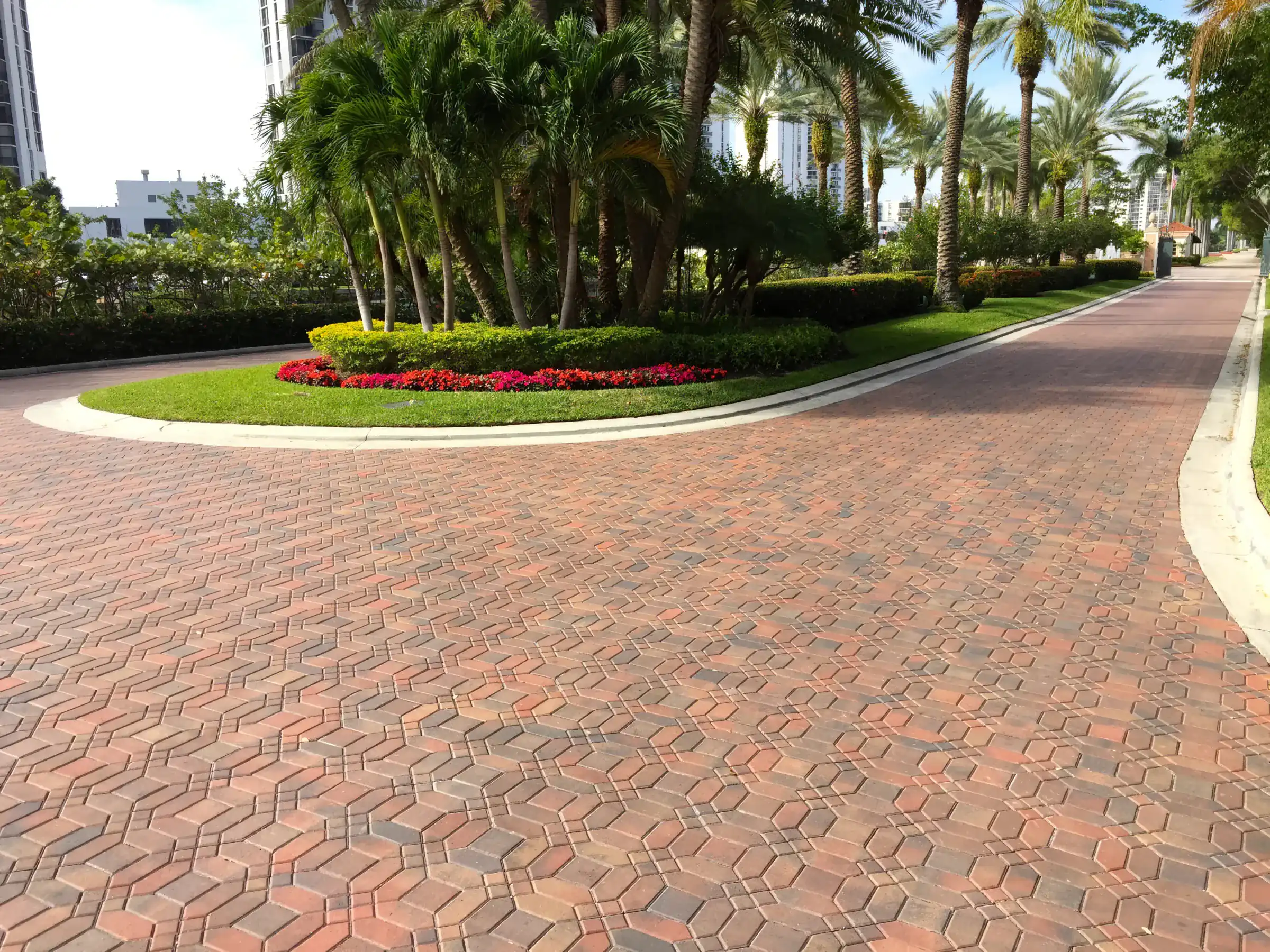
What is the difference between clay brick pavers and concrete pavers?
"Brick pavers" is often used for both. They are different products.
| Clay brick pavers | Concrete pavers | |
|---|---|---|
| Made from | Fired clay | Cement, aggregate and pigment |
| Color | Natural clay color through the whole unit, holds well in sun | Pigmented; quality products resist fading better |
| Shapes and sizes | Mostly classic brick shapes | Wide range: brick, cobble, large format, slab look |
| Look | Traditional, classic | Classic to modern |
| Driveway use | Choose units rated for vehicle traffic | Widely made for driveways, with interlocking shapes |
Both work in Miami when they are rated for vehicles and installed on a proper base. Ask your installer which products and manufacturers they use.
Which colors and textures suit Miami's climate?
- Light and mid-tone colors reflect more sun and stay cooler underfoot. Very dark pavers get hot.
- Blended colors hide dust, leaves and tire marks better than a single solid color.
- Textured or tumbled surfaces give better grip in rain than smooth faces.
- Match the house: red and terracotta blends suit Mediterranean and Spanish styles; grays and charcoals suit modern homes.
- Borders in a contrasting color frame the driveway and define the edges.
Ask to see full-size samples in daylight on your own driveway before choosing.
Which paver pattern is best for a driveway?
| Pattern | Strength under cars | Look |
|---|---|---|
| Herringbone | Strongest interlock, best for turning tires | Classic, busy |
| Running bond | Good, especially when rows run across the driving direction | Simple, linear |
| Basket weave | Weaker under traffic | Traditional, better for walkways and patios |
| Circles or fans | Decorative accents | Works well in motor courts and turnarounds |
What does a proper paver driveway installation include?
- Site assessment: soil, slope, drainage, utilities and trees.
- Removal: old concrete, asphalt or pavers, plus roots and soft soil.
- Grading: shaping the ground so water drains away from the house.
- Compacted base: crushed aggregate placed in layers and compacted.
- Edge restraints: solid edging so the pavers cannot spread.
- Bedding sand: a thin, even layer screeded flat.
- Laying: pavers set in the chosen pattern, cut cleanly at edges and curves.
- Joint sand and compaction: sand swept into joints and the surface compacted to lock the interlock.
- Optional sealing: to enhance color and help hold joint sand.
The base is the part you never see and the part that decides whether the driveway stays flat. In Miami, drainage design matters as much as the pavers: heavy rain needs a path off the driveway. Read why pavers shift on a slope for how water and edges affect a paver surface.
How do I maintain a brick paver driveway?
- Sweep regularly so leaves and dirt do not decompose in the joints.
- Rinse dirt and pollen off with a hose.
- Treat stains early: oil, rust and leaf stains are easier to remove when fresh.
- Top up joint sand where it has washed out, especially after pressure washing.
- Pull weeds early, before roots spread. See how to prevent weeds between pavers.
- Reseal when water no longer beads on the surface. See why sealing matters in Florida.
- Replace damaged pavers individually: lift, re-level the bedding and reset.
What are the main benefits of a paver driveway?
- Flexible surface that does not crack like a slab
- Individual units can be replaced
- Many colors, shapes and patterns
- Textured surface with good grip
- Strong curb appeal
The trade-offs: pavers usually cost more to install than plain concrete, and joints need some maintenance. For the stamped slab version of the same decision, see stamped concrete vs pavers. Compare both in concrete vs paver driveways.
How much does a brick paver driveway cost?
It depends on the paver, the pattern, the size, demolition, base work, drainage and permits. Ask for a free written quote based on your site.
Ready to plan yours?
MiamiCrete (license CGC1529269) installs paver driveways across Miami, including Coral Gables and Pinecrest. Request a free written quote or call (305) 790-4850.
Frequently Asked Questions
Are brick pavers good for driveways in Miami?
Yes, when the pavers are rated for vehicle traffic and installed on a compacted base with edge restraints and good drainage.
What is the difference between brick pavers and concrete pavers?
Clay brick pavers are fired clay with natural color through the unit. Concrete pavers are made of cement, aggregate and pigment, and come in many more shapes and sizes.
What paver pattern is strongest for a driveway?
Herringbone gives the strongest interlock under turning tires.
What color pavers stay cooler in Miami?
Light and mid-tone colors reflect more sun and stay cooler than dark pavers.
How do I maintain a paver driveway?
Sweep and rinse regularly, treat stains early, top up joint sand, pull weeds early, reseal when water stops beading, and replace damaged pavers individually.